Key Moments
"Climate Change is a Myth" -- A Nobel Prize Winner's Embarrassing Ideas
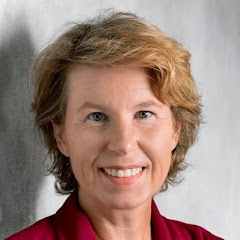 Sabine Hossenfelder
Key Moments
Nobel laureate John Clauser's climate change denial is debunked by physicist Sabine Hossenfelder.
Key Insights
Nobel laureate John Clauser incorrectly defines global warming based on radiative imbalance instead of temperature.
Clauser misunderstands or misrepresents how measurement uncertainties are calculated and applied in climate science.
Ocean heat content is a crucial, reliable indicator of global warming, contrary to Clauser's assertions.
Clauser's 'cloud thermostat' hypothesis is a flawed oversimplification that ignores cloud type complexity and atmospheric processes.
Clauser accuses climate scientists of dishonesty and incompetence, which Hossenfelder refutes with evidence.
The video highlights the importance of understanding scientific methodology and evidence-based reasoning in climate discussions.
FLAWED PREMISE: DEFINING GLOBAL WARMING
The video begins by dissecting Nobel laureate John Clauser's central argument that climate change is a myth. Clauser starts by focusing on the Earth's radiation imbalance, suggesting it's the definition of global warming. However, Hossenfelder points out that this premise is fundamentally incorrect; the IPCC defines global warming by changes in global surface temperature, not radiative imbalance alone. This initial misrepresentation sets a flawed foundation for Clauser's entire argument.
MISUNDERSTANDING RADIATIVE IMBALANCE AND UNCERTAINTY
Clauser claims that satellites cannot accurately measure the radiation imbalance due to large fluctuations and that the error bars are too significant to establish warming. Hossenfelder explains that while measurement uncertainties exist and natural variability is a factor, these are well-known issues that climate scientists account for. She clarifies that the formula Clauser uses for uncertainty summation is often misapplied, as it doesn't account for how correlated energy fluxes, particularly those absorbed by oceans, naturally reduce the overall uncertainty.
THE CRITICAL ROLE OF OCEAN HEAT CONTENT
A key piece of evidence that Clauser appears to overlook or deliberately misinterpret is the ocean's heat content. Hossenfelder emphasizes that oceans absorb a vast amount of heat, acting as a natural buffer and averaging out short-term fluctuations in radiative flux. Measurements of ocean heat content show a clear warming trend, providing a robust and reliable indicator of global warming that complements satellite data and offers a much smaller, more conclusive uncertainty than Clauser suggests.
DEBUNKING THE 'CLOUD THERMOSTAT' HYPOTHESIS
Clauser proposes a 'cloud thermostat' mechanism, suggesting that increased temperatures lead to more clouds, which then reflect more sunlight, cooling the planet. Hossenfelder counters this by explaining that clouds are far more complex than Clauser's simple model allows. Different cloud types at various altitudes have vastly different effects on temperature, with some trapping heat while others reflect it. The interaction between temperature, circulation, and cloud formation is a major area of research, not a simple feedback loop as Clauser suggests.
EXPOSING CLAUDER'S ACCUSATIONS OF DISHONESTY
A significant portion of Clauser's talk involves accusations that climate scientists are 'clueless' and 'dishonest.' Hossenfelder finds this particularly galling, especially coming from a fellow physicist. She systematically debunks his claims, showing how he either misunderstands or misrepresents established scientific principles regarding temperature anomalies, measurement uncertainties, and cloud feedback mechanisms. Clauser's assertions seem to stem from a deliberate cherry-picking of data and a misunderstanding of complex scientific processes.
THE 'MISSING ENERGY PROBLEM' AND CLAUDER'S SPECULATION
Hossenfelder addresses Clauser's discussion of the 'missing energy problem'—a period where satellite data showed a radiative imbalance but ocean heat content changes appeared to slow. She explains this was a temporary anomaly discussed by scientists, with various hypotheses proposed. Clauser's peculiar suggestion that the energy went into speeding up Earth's rotation is dismissed due to a lack of angular momentum and the precise measurement of Earth's rotation rate, which showed no such anomaly.
THE SIGNIFICANCE OF CLAUDER'S PLATFORM AND AUDIENCE
The video also touches upon the context of Clauser's talk, held at a conference organized by 'Doctors for Disaster Preparedness,' a known climate change denial group that has hosted other contrarians like Willie Soon. This suggests that Clauser is aligning himself with a group that actively promotes climate skepticism, rather than engaging in a neutral scientific debate. The speaker expresses a sense of 'fram,' a German word for being embarrassed by someone else's actions, due to the disappointing display from a Nobel laureate.
CONTRIBUTIONS AND CONTEXT FROM OTHER SCIENTISTS
Hossenfelder credits several scientists and channels for their input in helping her understand and refute Clauser's arguments. She mentions Gavin Schmidt and Graham Stevens, authors of relevant papers, and the 'Disproof' channel. This highlights the collaborative nature of scientific discourse and the efforts within the climate science community to address misinformation, even when it comes from respected figures like Clauser.
Mentioned in This Episode
●Software & Apps
●Organizations
●People Referenced
Debunking Climate Change Denial Arguments
Practical takeaways from this episode
Do This
Avoid This
Common Questions
John Clauser, a Nobel Prize winner, argues that climate change is a myth. His primary claims involve questioning the definition of global warming, the accuracy of temperature anomaly plots, and the measurement of radiative imbalance, suggesting that clouds provide a strong natural thermostat.
Topics
Mentioned in this video
Nobel Prize winner in physics who denies climate change and criticizes climate scientists.
An author who commented on the absurdity of Clauser's discussion on radiative imbalance.
Mentioned as someone who has spoken at the Doctors for Disaster Preparedness conference.
More from Sabine Hossenfelder
View all 65 summaries 7 min
7 minBreakthrough In Data Storage Could Store Your Photos for 10000 Years
 7 min
7 minThe Simulation Hypothesis Gets Scientific Backing
 7 min
7 minSurprise! Milky Way Might Not Have a Black Hole After All
 7 min
7 minThe First Moon Landing Wasn’t Apollo — And We Just Found It
Found this useful? Build your knowledge library
Get AI-powered summaries of any YouTube video, podcast, or article in seconds. Save them to your personal pods and access them anytime.
Get Started Free