Key Moments
Christopher Capozzola: World War I, Ideology, Propaganda, and Politics | Lex Fridman Podcast #320
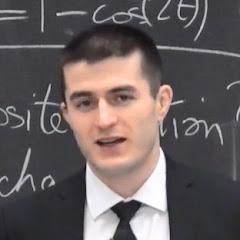 Lex Fridman
Want to know something specific about what's covered?
We've already dissected every moment. Ask and we will deliver (with timestamps).
Key Moments
WWI's origins, mechanics, and the US entry reveal a system of empires, arms races, and propaganda that reshaped modern citizenship and surveillance.
Key Insights
World War I's origins were rooted in a generation-long arms race and imperial rivalries, not just the summer of 1914 events.
The war transformed American society, defining citizenship through new obligations and the pervasive use of propaganda and surveillance.
Advanced industrial weaponry, particularly artillery and machine guns, dramatically increased casualties and led to trench warfare's static nature.
The US entry into WWI was a choice, driven by German unrestricted submarine warfare, despite internal division and public awareness of the war's devastation.
WWI laid groundwork for the surveillance state, with acts like the Espionage Act enabling government monitoring and suppressing dissent.
While WWI saw war profiteering, the true 'military-industrial complex' as an unstoppable force solidified during the Cold War.
The Treaty of Versailles imposed harsh terms on Germany, fostering resentment that contributed to the rise of Nazism and World War II.
History teaches resilience; citizens should avoid cynicism and apathy, recognizing that progress often stems from collective action and learning from the past.
Nationalism can be constructive if inclusive, but becomes destructive when exclusionary, fueling hatred and conflict.
Understanding history requires empathy, even for leaders with whom we disagree, to grasp the human condition and avoid repeating past mistakes.
THE IGNITION OF GLOBAL CONFLICT
World War I, initiated by complex geopolitical maneuvers in the summer of 1914, had deeper roots stretching back decades. Rising powers, particularly Germany, engaged in extensive military and naval build-ups, triggering an arms race and imperial competition for resources in Africa and Asia. This underlying tension meant that by 1914, the capacity for war was already brewing, with leaders and populations gradually accepting military action as a legitimate tool of statecraft. This systemic rivalry, rather than a single event, lit the fuse for a global conflagration.
THE MECHANICS OF MODERN WARFARE
The Great War was fundamentally shaped by the industrial revolution, which brought devastating new technologies to the battlefield. Machine guns and artillery, in particular, became instruments of mass destruction, with artillery shelling accounting for the vast majority of casualties. Human waves of soldiers were repeatedly sent over the top in futile attempts to break the entrenched lines, leading to the brutal reality of trench warfare. This stalemate transformed the battlefield into a meat grinder, locking armies in place and escalating the war's death toll.
AMERICA'S ENTRY AND THE REVOLUTION IN CITIZENSHIP
The United States' entry into World War I in 1917 was a deliberate choice, spurred by Germany's resumption of unrestricted submarine warfare, including attacks on American ships. Despite a divided public and an election campaign focused on neutrality, President Woodrow Wilson led the nation into war. This decision dramatically redefined American citizenship, demanding new obligations and fostering a sense of collective identity through widespread propaganda. The "I Want You" poster became an iconic symbol of this shift, urging citizens to actively participate in the national war effort.
THE BIRTH OF THE SURVEILLANCE STATE
The war effort led to an unprecedented expansion of federal power and the emergence of the surveillance state in the U.S. The Espionage Act of 1917 empowered the government to monitor citizens, suppress dissent, and curtail freedom of speech. Agencies like the FBI and the Post Office were mobilized to track individuals, particularly those suspected of disloyalty or opposition to the draft. While some aspects of this wartime expansion waned after 1918, the core infrastructure of surveillance remained, fundamentally altering the relationship between the government and its citizens.
THE LONG SHADOW OF VERONAILLES AND THE PATH TO WORLD WAR II
The Treaty of Versailles, intended to secure peace, instead sowed the seeds for future conflict. The harsh reparations and territorial losses imposed on Germany fostered deep resentment and political instability, creating fertile ground for extremist ideologies like Nazism. For the United States, the failure to fully engage with the League of Nations meant a diminished role in post-war international order, indirectly contributing to the eventual return to global conflict. In Asia, Japan's economic and military growth during WWI, fueled by industrialized expansion, positioned it for its own aggressive role in World War II.
NATIONALISM, CITIZENSHIP, AND THE LESSONS OF HISTORY
World War I highlighted the potent and often dangerous nature of nationalism, distinguishing between inclusive, civic patriotism and exclusionary, ethnic-based nationalism. The war experience forced a re-evaluation of citizenship, emphasizing the obligation to defend the nation, even at the cost of personal liberty. Historians stress the importance of learning from this past, advocating for optimism, empathy, and a recognition of human resilience. Understanding history, even its darkest chapters, provides crucial context for navigating present challenges and striving for a more peaceful future.
Mentioned in This Episode
●Software & Apps
●Organizations
●Books
●Concepts
●People Referenced
Common Questions
World War I began with a series of events in the summer of 1914, but its roots trace back a generation earlier due to rising powers like Germany investing heavily in military affairs, leading to an arms race and colonial rivalries in Africa and Asia. The assassination of Archduke Franz Ferdinand was merely the trigger for a conflict already brewing within the imperial system.
Topics
Mentioned in this video
The leader of the German Empire, who is considered to bear significant responsibility for the outbreak of World War I due to arms buildup, alliances, and pressuring Austro-Hungarians.
Podcaster known for his engaging historical narratives, specifically 'Blueprint for Armageddon' on WWI. Praised for his storytelling ability despite not being a trained academic historian.
His assassination in Sarajevo triggered a series of political conflicts and ultimatums that ultimately led to the escalation of World War I.
His presence in past elections and potential run in 2024 are discussed, noting the intense partisanship and claims of rigged elections during his campaigns. His Twitter ban is also a key topic.
Praised as the greatest American president for his combination of personal leadership, moral character, political acumen, and guiding the US through the Civil War.
His historical remembrance, along with Zelensky's, is noted as uncertain and dependent on future geopolitical events.
Artist who created the iconic 1916 'I Want You for U.S. Army' poster featuring Uncle Sam, which became a powerful recruitment and propaganda tool during WWI.
A Spanish-American philosopher who famously responded to Woodrow Wilson's 'war to end all wars' quote with, 'Only the dead have seen the end of war' in 1922.
President who introduced the term 'military-industrial complex' in his farewell address, expressing fear that no one had an interest or voice in stopping its expansion.
Acknowledged for his statesman qualities and willingness to relinquish power, but ultimately ranked below Lincoln as the greatest president.
Author of 'The Rise and Fall of the Third Reich,' known for his extensive use of primary sources in his historical accounts of Nazi Germany.
Soviet leader who, pushed by mass movements for openness, engaged with Ronald Reagan in Reykjavik to negotiate caps on nuclear weapons, demonstrating how leaders can stop war.
His potential re-election bid in 2024 is discussed as an open question, along with the general unpredictability of the upcoming election.
Initially dismissed and left office with abysmal ratings, but hindsight proved him to be a better president than understood at the time, better at building institutions and winning the long game.
A charismatic leader who channeled German resentment after WWI into aggressive expansion, skillful deceit, and ultimately World War II. His singular influence on history is debated.
President of the United States through WWI, he ran on a campaign to keep the US out of war in 1916 but later led the country into the conflict in 1917. Later, he sought to craft a new international order to prevent future wars.
US President who, pushed by mass movements for nuclear freeze, engaged with Mikhail Gorbachev in Reykjavik to negotiate caps on nuclear weapons, demonstrating how leaders can stop war.
His historical remembrance, along with Putin's, is noted as uncertain and dependent on future geopolitical events.
Author of 'Blitzed: Drugs in the Third Reich' which posits a significant role for methamphetamine in WWII, particularly regarding Hitler and the Blitzkrieg strategy. Characterized as not a trained academic historian.
A rising power that devoted significant resources to military and naval affairs, initiating an arms race in Europe before WWI. Held the most responsibility for starting WWI due to its imperial system.
Used as a contemporary parallel to the pre-World War I Balkan conflicts, raising concerns about potential escalation into a larger global conflict.
The site of a crucial debate between Ronald Reagan and Mikhail Gorbachev that led to agreements on capping nuclear weapons, influenced by popular movements.
World War I was transformative for Japan, leading to massive economic expansion, industrialization, and militarization, which laid groundwork for its military wing in the 1930s.
One of the major European powers that entered WWI as part of an alliance against Germany, fighting effectively against initial German advances.
Mentioned as a region where European powers had colonial rivalries and asymmetrical military conflicts were already underway before WWI.
Mentioned as a region where European powers had colonial rivalries and asymmetrical military conflicts were already underway before WWI.
The city where Archduke Franz Ferdinand was assassinated, an event that triggered the series of conflicts leading to World War I.
A law passed soon after the US entered WWI, demanding all men between 18-45 register for the draft, leading to 24 million registrations and 4 million serving.
The peace treaty after WWI, shaped by the US, Britain, and France. It maintained imperial conflicts, bankrupted Germany, and fueled resentment, laying groundwork for WWII.
An omnibus bill (with little to do with espionage) that made it illegal to interfere with military recruitment, used to suppress radical and German-language publications during WWI, and is back in the news in 2022.
Refers to the symbiotic relationship between a nation's military and the arms industry. The concept gained traction to describe the post-WWII Cold War era rather than WWI, where the relationship was more cyclical.
Mentioned as an example from the Reconstruction period of direct interference in election outcomes by blocking black voters in the South.
One of the major European powers allied with Britain and France that entered WWI due to secret defense agreements.
An empire that had secret agreements with Germany and Austria-Hungary, committing them to mutual defense and drawing them into World War I.
The federal agency that was very small during WWI but became involved in surveillance, particularly against those obstructing the draft or having German sympathies.
Mentioned as potentially having a role in the current war in Ukraine, viewed in the context of the complex web of alliances preceding World War I.
Cited as an example of a media outlet that people consume, with the understanding that consumers are often smarter than the media they engage with.
A revolution breaking out in Mexico during the WWI neutrality period was another concern for the US, alongside events in Europe.
Cited as an example of a media outlet that people consume, with the understanding that consumers are often smarter than the media they engage with.
The personification of the U.S. government, featured in a famous WWI recruitment poster, symbolizing the demands the federal government made on its citizens.
A US congressional committee that investigated war profiteering in the period after World War I, reflecting public concern about the profit motive in warfare.
Mentioned as an institution that social media platforms like Twitter and YouTube blindly followed during COVID-19 without taking full responsibility for information dissemination.
An international organization proposed by Woodrow Wilson after WWI to prevent future conflicts. The US's failure to join is seen as setting up the possibility for WWII.
The Nazi regime in Germany. Discussed in relation to the role of drugs in sustaining soldiers and the regime's inherent instabilities despite wartime propaganda.
Defined as crucial for nation-states, requiring belief in a common project. Differentiated from exclusionary nationalism (ethnic hatreds) and inclusive nationalism (welcoming new people).
A military strategy involving a swift, overwhelming attack with concentrated forces. Discussed in the context of theories linking its execution to drug use during WWII.
The preceding 30-40 years of industrialization brought powerful new weaponry to warfare in WWI, including machine guns and artillery, causing the vast majority of casualties.
Defined as an emotion, a feeling of love of country, which can be a necessary condition to participate in nationalism.
Discussed as a paradoxical platform: fundamentally democratic in one sense but a for-profit corporation in another. Its role in shaping political conversation and its decision to ban Donald Trump are examined.
One of the major European powers that allied with France and Russia, entering WWI due to secret defense agreements. Its potential non-involvement is discussed as a counterfactual.
More from Lex Fridman
View all 552 summaries 227 min
Gary Gallagher: American Civil War, Slavery, Lincoln, Grant & Lee | Lex Fridman Podcast #499
 232 min
The Rise and Fall of the Roman Empire and the Byzantine Empire | Lex Fridman Podcast #498
 174 min
Biggest Mysteries in Physics: Antimatter, Dark Energy & ToE - Don Lincoln | Lex Fridman Podcast #497
 259 min
FFmpeg: The Incredible Technology Behind Video on the Internet | Lex Fridman Podcast #496
Ask anything from this episode.
Save it, chat with it, and connect it to Claude or ChatGPT. Get cited answers from the actual content — and build your own knowledge base of every podcast and video you care about.
Get Started Free