Key Moments
CEO Coach Matt Mochary — Coaching Tim, Why Fear and Anger Give Bad Advice, and More
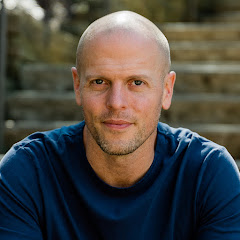 Tim Ferriss
Key Moments
Matt Mochary on leadership, emotional intelligence, and actionable strategies for personal and organizational growth.
Key Insights
Fear and anger provide warning signals but their exaggerated predictions often lead to poor decisions.
Effective coaching involves identifying and betting against fear-based predictions to drive action.
Accountability through biased action and written commitments is crucial for execution.
Separating decision-making from implementation allows for better, more empathetic choices.
Firing well and recruiting effectively involve understanding human realities and leveraging intuition.
Energy audits and shadowing assistants can optimize personal and professional efficiency.
UNDERSTANDING FEAR AND ANGER IN DECISION-MAKING
Fear and anger serve as initial warnings, signaling potential threats. However, the predictions these emotions generate are often exaggerated, stemming from a primal need for survival rather than rational assessment. While a saber-toothed tiger posed a genuine threat, modern anxieties are typically ego-related. This can lead to actions like yelling in frustration or withholding crucial feedback due to fear of a negative reaction, ultimately hindering performance and fostering unproductive environments. Recognizing these exaggerated predictions is the first step toward making better, more aligned decisions.
LEVERAGING EMOTIONAL INSIGHTS THROUGH ACTIONABLE BETS
A core coaching technique involves identifying when fear or anger is driving a person's thinking and leveraging this insight through predictive 'bets.' By encouraging individuals to predict a negative outcome driven by fear, the coach can offer an opposing, more positive prediction. This mechanism challenges the person's fear-based assumptions, often revealing that the feared outcome is less likely than anticipated. This process helps clients recognize their own fear-driven biases and build confidence in taking action that aligns with their goals rather than their anxieties.
THE POWER OF ACCOUNTABILITY AND BIASED ACTION
Matt Mochary emphasizes 'biased action'—a philosophy that prioritizes taking concrete steps over prolonged deliberation. This principle is embedded in his coaching through a rigorous system of writing down agreed-upon actions and ensuring accountability. This process isn't about micromanagement but about facilitating success. By creating a commitment in writing and following up, individuals are more likely to execute, breaking through inertia and building momentum. This approach applies equally to personal habits, team projects, and organizational strategies, turning thought into tangible progress.
SEPARATING DECISIONS FROM IMPLEMENTATION FOR EMPATHETIC LEADERSHIP
A key insight from Weili Dai highlights the importance of distinguishing between making a decision and implementing it. Often, the difficulty in deciding stems from conflating the two, particularly when implementation involves potentially hurting someone. By separating these, leaders can first identify what's best for the primary stakeholder (customer, LPS, self). Then, they can address the 'implementation pain' by considering the needs of those negatively affected and devising compassionate solutions, such as acting as a career agent for a departing employee.
MASTERING RECRUITING AND FIRING WITH REALISM AND EMPATHY
Effective recruiting involves rigorous evaluation and strategic selling. This includes conducting thorough reference checks with former managers and 'anti-selling' candidates by highlighting job challenges to ensure genuine interest. Similarly, firing well is presented not as a punitive act but as a critical organizational function that impacts company morale. By treating departing employees with empathy and offering support, companies can reduce fear among remaining staff and foster a more trusting environment. This humane approach, even in difficult situations, ultimately benefits the organization.
OPTIMIZING ENERGY AND EFFICIENCY THROUGH AUDITS AND SHADOWING
An 'energy audit' is a practice of tracking time for a week to identify activities that deplete or energize. The goal is to eliminate or delegate energy-draining tasks. Further optimizing efficiency involves 'shadowing,' where an assistant observes and learns a leader's processes over several months. This cultivates a highly capable support person who can eventually handle complex tasks, make decisions, and even manage departments. This method, when applied consistently, frees up leaders to focus on their most impactful work, enhancing both personal productivity and organizational effectiveness.
TRANSFORMING ANGER THROUGH PAIN AND PRESENCE
Anger, Matt Mochary explains, often masks underlying pain. Shifting from anger involves acknowledging and feeling that pain directly, rather than projecting it outward. This process can be facilitated by breathing exercises, physical movement, and, crucially, by having someone outside help identify the anger and the associated pain. By sitting with the discomfort and avoiding numbing mechanisms, individuals can process the root cause of their anger, leading to a significant reduction in angry outbursts and more harmonious relationships. This practice underscores that emotional regulation is a skill that can be learned and applied.
THE VALUE OF DEDICATED SUPPORT AND THE 'SUPER ASSISTANT'
Delegating effectively is key to scaling impact without burning out. This involves cultivating what Mochary calls a 'super assistant' or Chief of Staff. This person is trained through shadowing and reverse shadowing to think and operate similarly to the leader, capable of handling intricate tasks and decision-making. This not only frees up the leader's time but also builds organizational capacity. The key is to provide full access and foster a relationship built on trust and mutual respect, ensuring that the support system becomes an invaluable asset rather than a mere stepping stone.
ETHICAL CONSIDERATIONS AND MAKING A POSITIVE GLOBAL IMPACT
Beyond personal and organizational efficiency, Mochary's work extends to social impact. His experience with the 'Free World' initiative, which helps formerly incarcerated individuals find stable employment, demonstrates a commitment to addressing deep-seated societal issues. This work, driven by the realization that criminality can be a rational response to systemic deprivation, highlights the potential for meaningful change through targeted, practical interventions. This focus on 'doing good' underscores a philosophy of contributing beyond personal or corporate gain.
Mentioned in This Episode
●Software & Apps
●Companies
●Organizations
●Books
●Concepts
●People Referenced
Actionable Strategies for Productivity and Emotional Intelligence
Practical takeaways from this episode
Do This
Avoid This
Common Questions
Fear and anger serve as warning signals, but the brain often exaggerates their predictions, leading to exaggerated reactions and poor decisions. Matt Mochary suggests that these emotions primarily threaten our ego, not physical survival, making aggressive responses or avoiding necessary feedback counterproductive. The recommended approach is to identify the fear or anger, unpack the underlying predictions, and challenge their exaggeration.
Topics
Mentioned in this video
Associated with OpenAI, notably coached by Matt Mochary.
Teacher of Diana Chapman, mentioned in relation to the energy audit concept.
Startup investor and entrepreneur mentioned in the context of testing assumptions, particularly about the necessity of being a CEO.
CEO coach for top Silicon Valley tech and investment firms, author of 'The Great CEO Within,' and creator of the Mochary Coaching Methodology.
Co-founder of Reddit and a client of Matt Mochary, who also requested software for the Mochary method.
Former guest on Tim Ferriss's show and source of the 'energy audit' concept, and teacher, along with Gay Hendricks and Katie Hendricks.
Stoic philosopher whose writings Tim Ferriss has promoted.
Roman Emperor and Stoic philosopher whose writings Tim Ferriss has promoted.
Entrepreneur and author, whose approaches to hiring and firing Tim Ferriss aspires to emulate.
CEO of Coinbase, coached by Matt Mochary, who later requested software for the Mochary method.
Himself formerly incarcerated, he now runs Free World, an organization that helps felons find truck driving jobs.
Friend of Tim Ferriss and CEO, listed as one of Matt Mochary's recognized clients.
Friend of Tim Ferriss frequently labeled as a 'Tech Bro' in media pieces about Stoicism, despite living on a farm.
Author mentioned in contrast to Stoic philosophers, suggesting Stoicism is a preferable read.
Workshop facilitator whose work on relationships Tim Ferriss attended with his ex-partner, leading to improvement in his communication toolkit.
Social media platform where Matt Mochary can be found.
Research organization associated with Sam Altman.
Referred to as a company that practices a meeting style where participants pre-write issues for discussion.
Cryptocurrency exchange where Brian Armstrong is CEO.
A company Matt Mochary coaches, noted for its highly effective, accountability-driven meeting style.
Social news aggregation, content rating, and discussion website co-founded by Steve Huffman.
File hosting service, mentioned as the owner of the HelloSign software for document signing.
Location of a vocational school for construction skills, established for local Hawaiians, which Matt Mochary coaches but does not run.
One of the world's largest correctional institutions, located in New York City, where Matt Mochary sought a 'hardest case' to help find employment.
An area in New York City, described as a ghetto, where Matt Mochary filmed 'The Gloves' and observed how a lack of educational opportunities contributed to criminal activity.
Region known for its tech companies, mentioned in the context of Matt Mochary's client base and the practice of indirect reference checks.
City where Tim Ferriss resides, described as experiencing constant construction noise.
City in Brazil, specifically its poorest slums, where 'Favela Rising' was filmed, leading Matt Mochary to observe the economic problem of criminality.
Borough of New York City where a halfway house for Rikers inmates is located, and where Matt Mochary brought a former inmate to his office.
A documentary film that used audio from Tim Ferriss's podcast, leading to a legal review process.
Musical often referenced for its 'Eliza Doolittle' experiment, used by Matt Mochary to describe his attempt to help an incarcerated individual find legitimate employment.
Documentary film about the drug war in the slums of Rio, Brazil, produced by Matt Mochary, which informed his views on criminal behavior.
Matt Mochary's second documentary film about amateur heavyweight boxing in the South Bronx, which further informed his understanding of rational criminal behavior.
Matt Mochary's philosophy and method, available as a free Google Doc and soon to be a software solution.
A communication framework that Tim Ferriss learned through workshops, which helped him reduce instances of anger.
An ancient philosophy discussed in the context of media misrepresentation and personal benefit.
A structured interview technique, described by Matt Mochary, focusing on a candidate's job history and obtaining references directly from past managers.
Website where the coaching curriculum can be found.
Online document application used to make the Mochary Coaching Methodology and 'The Great CEO Within' available for free.
An online app costing five dollars a month that pairs people to sit on screen for 50 minutes while doing administrative tasks for shared accountability.
AI model whose creation Matt Mochary feels a part of through his coaching, even though he didn't explicitly coach at OpenAI during its development.
Ivy League university where Matt Mochary had African-American roommates who spoke with a particular tone, creating a 'reverse bias'.
An organization founded by Matt Mochary and a friend, run by Jason Wang, that helps formerly incarcerated individuals find legitimate jobs, primarily as truck drivers.
Non-profit organization and thrift store where Matt Mochary took an ex-con to buy professional clothing.
More from Tim Ferriss
View all 689 summaries 81 min
Q&A with Tim — The Upcoming AI Tsunami and Building Offline Advantage
 91 min
The Random Show, Couch Edition! — Supplements, Breathing and Balance Training, and Much More!
 76 min
How to Quiet the Ruminative Mind and Avoid The Traps of Self-Help — Tim Ferriss
 86 min
NYT Bestselling Author on Writing 200+ Children's Books — Tish Rabe
Found this useful? Build your knowledge library
Get AI-powered summaries of any YouTube video, podcast, or article in seconds. Save them to your personal pods and access them anytime.
Get Started Free