Key Moments
Carl Jung and the Archetypes - Making the Unconscious Conscious
 Academy of Ideas
Key Moments
Carl Jung's archetypes: uncovering the unconscious for personal growth and universal wisdom.
Key Insights
The psyche is divided into conscious and unconscious realms, with the unconscious being vastly larger.
The unconscious comprises personal experiences (personal unconscious) and inherited, universal patterns (collective unconscious).
Archetypes are innate, universal patterns of the collective unconscious that shape our psychological responses.
Consciousness, though developed later, allows adaptation but also brings suffering and disconnection from instinct.
Making the unconscious conscious, starting with personal elements like the 'shadow,' is crucial for psychological wholeness.
Dreams, symbols, and spiritual practices are vital for accessing and integrating archetypal wisdom.
THE DUAL NATURE OF THE PSYCHE
Carl Jung dedicated his work to understanding the human personality by exploring the psyche, which he defined as the inner world of mental occurrences. He divided the psyche into two fundamental categories: the conscious and the unconscious. Conscious elements are those we are aware of, can control, and reflect upon. In contrast, the unconscious encompasses an 'indefinitely large Hinterland' of psychic phenomena that lie below awareness. This vast unconscious realm is uncontrollable by will and inaccessible to direct reflection, serving as the primary basis for all conscious experience.
LAYERS OF THE UNCONSCIOUS
Jung further delineated the unconscious into two distinct layers: the personal and the collective. The personal unconscious contains forgotten, repressed, or subliminal material acquired throughout an individual's life. This layer is uniquely personal and can include memories, experiences, and suppressed emotions. Beneath this personal layer lies the collective unconscious, a deeper, inherited stratum comprising universal patterns and modes of behavior common to all humanity. This collective layer is not a product of individual experience but of the species' evolutionary history.
ARCHETYPES AS UNIVERSAL PATTERNS
The contents of the collective unconscious are known as archetypes. These are innate, universal patterns of perception and behavior that predispose individuals to certain psychological experiences, much like instincts predispose organisms to physical responses. Archetypes act as inherited 'riverbeds' along which psychic life flows, providing forms or structures for our emotional and psychological reactions to life's common challenges. They are the psychic equivalent of instincts, guiding our apprehension of the world.
THE EMERGENCE AND BURDEN OF CONSCIOUSNESS
Consciousness is a relatively recent development in human evolution, arising from the unconscious. While it has transformed humans into a species capable of adaptation, reflection, and manipulation of the world, it also brings suffering. Unlike instinct-driven animals, conscious humans face dilemmas, anxiety, and inner tension. Jung described the development of consciousness as humanity's 'burden, the suffering, and the blessing,' enabling flexible thought, planning, and adaptation but disconnecting us from the certain guidance of instinct.
INTEGRATING THE UNCONSCIOUS FOR WHOLENESS
Jung's central aim was to make the unconscious conscious, leading to psychological wholeness. This process begins with confronting the personal unconscious, particularly the 'shadow' – our repressed weaknesses and flaws. Acknowledging and integrating these aspects, rather than denying them, tempers their negative influence and allows for greater self-awareness. By delving into the personal unconscious, one can then access the deeper wisdom of the collective unconscious and its archetypes.
ACCESSING COLLECTIVE WISDOM THROUGH SYMBOLS
Accessing the collective unconscious provides profound wisdom from our species' past, offering guidance through universal life challenges via archetypes like the mother, father, hero, and the archetype of the Self. These archetypes manifest through symbols, psychic images that point to deeper meaning. Modern life's distractions, such as technology and fixation on social image, impede this connection. Practices like dream analysis, engagement with art, mythology, and religious rituals are crucial for recognizing and integrating these archetypal symbols.
THE TRANSFORMATIVE POWER OF ARCHETYPES
When archetypes are constellated, they can seize an individual with emotionally charged ideas and impulses, guiding them toward potent self-transformation. The Mandala symbol, representing wholeness, is an example of an archetypal expression that can restore order during psychic chaos. Dreams serve as a primary vehicle for archetypal manifestation, offering insights if properly interpreted. Engaging with these symbolic representations of archetypes leads to profound personality development and a more spontaneous, aligned existence.
PERILS OF DISCONNECTION AND SOCIAL RUIN
Failing to consciously connect with the unconscious, both personal and collective, results in a diminished personality and limited potential. Furthermore, when a society becomes overly one-sided and disconnected from archetypal wisdom, it risks destructive outcomes. Unintegrated archetypes can manifest as heightened emotions, leading to war, persecution, and mass psychogenic illnesses. Jung asserted that consciousness exists precisely to prevent such destructive possibilities by enabling conscious dialogue with the psyche's deeper layers.
Mentioned in This Episode
●People Referenced
Making the Unconscious Conscious: A Jungian Guide
Practical takeaways from this episode
Do This
Avoid This
Common Questions
Carl Jung believed that consciousness, though powerful, is only a part of the total psyche. 'Making the unconscious conscious' involves bringing repressed thoughts, feelings, and archetypal patterns from the unconscious mind into awareness, integrating them, and thus achieving greater psychological wholeness.
Topics
Mentioned in this video
More from Academy of Ideas
View all 21 summaries 2 min
2 minAnxiety Disorders – What Causes Them, And Why They Persist
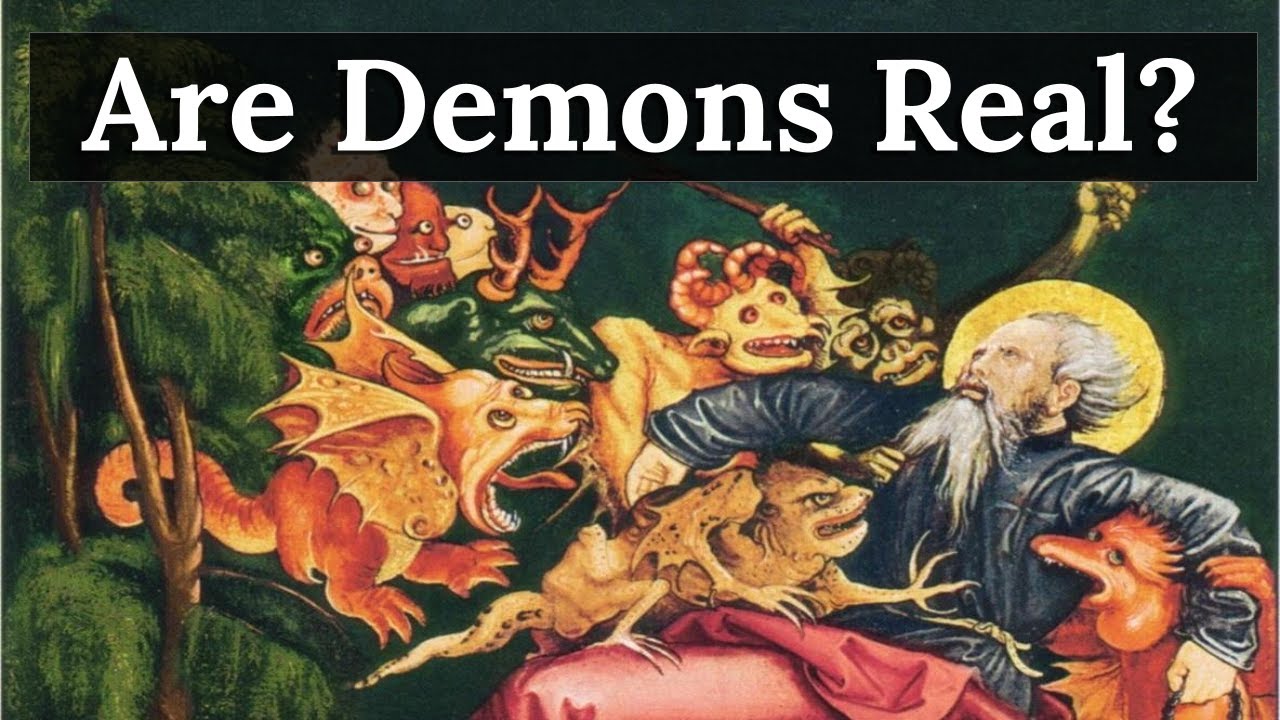 12 min
Carl Jung - Are Demons Real?
 11 min
Why We Sabotage Ourselves - The Psychology of Self-Handicapping
 12 min
The Psychology of Online Haters - Nietzsche's "Poisonous Flies"
Found this useful? Build your knowledge library
Get AI-powered summaries of any YouTube video, podcast, or article in seconds. Save them to your personal pods and access them anytime.
Get Started Free