Key Moments
Can I Beat A Pro Poker Player With 4 Days Of Training?
 Tim Ferriss
Key Moments
Tim Ferriss trains for 4 days and beats pros at poker by focusing on selective aggression and solid strategy.
Key Insights
Poker can be approached as a game of skill and strategy, not just chance, by focusing on statistical likelihood and pattern recognition.
Effective poker strategy involves selective aggression: folding most hands but playing aggressively when holding a strong hand or in a favorable position.
Positional advantage is crucial in poker; being 'in the office' (acting last) provides an informational edge, allowing for more informed decisions.
Tells and predictable behavior can be exploited by opponents; maintaining a poker face and consistent betting behavior are key to avoiding exploitation.
Even with limited training, a structured approach focusing on fundamental principles like hand selection and position can lead to success against skilled players.
Mental fortitude, including managing nerves and avoiding impatience, is critical for consistent performance in high-stakes poker situations.
THE CHALLENGE OF LEARNING POKER
Tim Ferriss embarks on an ambitious experiment: to learn and compete in poker with only four days of training. Facing a phobia of math and a general aversion to gambling, Ferriss aims to transform poker from a perceived game of chance into one of skill. He partners with World Poker Tour Champion Phil Gordon, who emphasizes that luck cannot be taught, but pattern recognition and strategic betting can be learned to statistically ensure positive outcomes.
FOUNDATIONAL STRATEGIES AND HAND RANKINGS
Gordon introduces Ferriss to the fundamental concepts of poker, including Texas Hold'em rules, hand rankings from pairs to straight flushes, and the mechanics of betting rounds (pre-flop, flop, turn, river). The core strategy highlighted is selective aggression: being highly selective about which hands to play but betting aggressively once a hand is chosen. This approach contrasts with pure gambling, focusing on making calculated investments with a statistical edge.
THE POWER OF POSITION AND OBSERVATION
A key lesson revolves around positional advantage. Acting later in a betting round, known as 'the office,' provides an invaluable informational edge. This allows players to observe opponents' actions before deciding their own, leading to more informed and selectively aggressive plays. Ferriss learns to utilize charts detailing playable hands based on position, understanding that being in a strong position is fundamental to strategic poker success.
MANAGING TELLS AND EMOTIONAL CONTROL
Ferriss quickly discovers the importance of controlling 'tells'—unconscious physical or behavioral cues that reveal hand strength. His initial tendency to check his cards frequently after the flop reveals his hand's weakness, a habit needing correction. The experiment underscores the need for a poker face and consistent behavior, ensuring opponents cannot easily deduce hand strength, thereby enabling more effective bluffing and intimidation.
ADAPTIVE STRATEGY AND HEADS-UP PLAY
As training progresses, Ferriss begins to internalize the strategies, improving his ability to assess hand strength and opponent tendencies. The focus shifts towards adaptive strategies, particularly for heads-up (one-on-one) play, where opponent chip stacks and blind dynamics heavily influence hand selection. This advanced stage requires a delicate balance of patience, aggression, and calculated risks, especially when short-stacked.
THE FINAL CHALLENGE AND RESULTS
In the final four-day challenge, Ferriss faces three skilled poker players with his own money on the line. Despite initial nerves and the inherent volatility of poker, he applies the learned principles of selective aggression, positional play, and calculated risks. Astonishingly, Ferriss manages to win all three matches—against a semi-pro and two professionals—demonstrating that a structured, systematic approach, even with minimal training, can yield remarkable results against experienced players.
Mentioned in This Episode
●Software & Apps
●Concepts
●People Referenced
Poker Training Cheat Sheet: 4 Days to Pro?
Practical takeaways from this episode
Do This
Avoid This
Common Questions
While not becoming a world-class professional, this video demonstrates that significant improvement in understanding strategy, hand selection, and aggression is possible within a short timeframe, enabling basic success against skilled players.
Topics
More from Tim Ferriss
View all 689 summaries 81 min
Q&A with Tim — The Upcoming AI Tsunami and Building Offline Advantage
 91 min
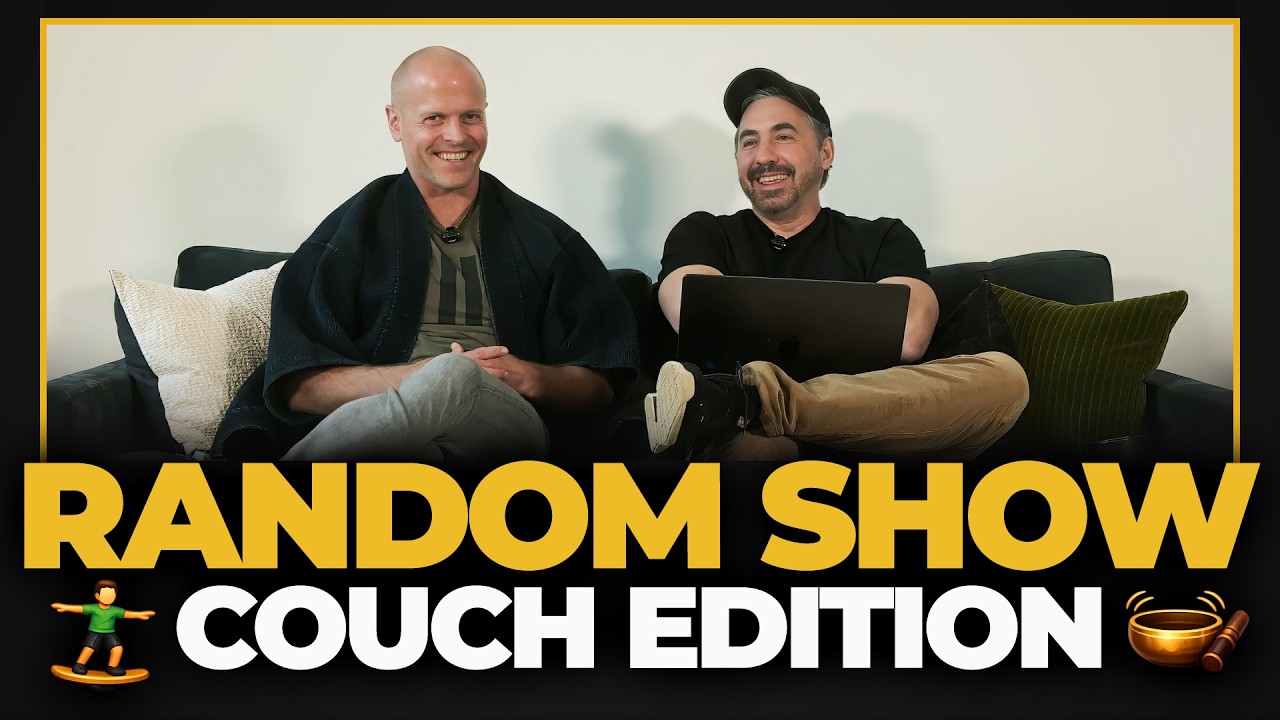
The Random Show, Couch Edition! — Supplements, Breathing and Balance Training, and Much More!
 76 min
How to Quiet the Ruminative Mind and Avoid The Traps of Self-Help — Tim Ferriss
 86 min
NYT Bestselling Author on Writing 200+ Children's Books — Tish Rabe
Found this useful? Build your knowledge library
Get AI-powered summaries of any YouTube video, podcast, or article in seconds. Save them to your personal pods and access them anytime.
Get Started Free