Key Moments
Cal And Jamie Explain The Internet | Old, Weird Internet
 Deep Questions with Cal Newport
Key Moments
Two guys out of touch with internet culture explain trending topics, highlighting online tribalism and the shift from old to new internet.
Key Insights
The internet has evolved from a space of personal expression to one dominated by tribalism and polarization.
Online discourse often devolves into negativity and attacks, even on positive or inoffensive content.
Certain online platforms encourage a performative negativity, where contrarian or critical takes gain traction.
There's a growing desire to disconnect from the negativity of social media and seek more authentic, offline experiences.
The perceived 'old internet' offered more anonymity and less pressure for public amplification.
Celebrity gossip and viral stunts, while seemingly superficial, tap into a primal engagement mechanism.
THE RETURN TO OLD INTERNET
The discussion opens with a lament for the "old, weird internet" characterized by hand-coded sites and personal blogs. This era, exemplified by platforms like Geocities and Angel Fire, offered a sense of anonymity and a lack of pressure for content to go viral. The hosts contrast this with the current internet, where any post can be amplified to millions instantly. They find a glimmer of hope in niche communities, like those on Tumblr, where obscure content can thrive without broader societal scrutiny, suggesting a return to a more personal and less amplified online experience.
THE TOXICITY OF ONLINE TRIBEALISM
A significant portion of the conversation revolves around how online discourse has become tribal and antagonistic. The Lex Fridman book-reading list incident serves as a prime example, where positive intentions were met with intense criticism and accusations of ulterior motives. The hosts argue that social media trains users to look for negative angles or political affiliations, discrediting genuine efforts at connection or self-improvement. This tribalism extends to disliking content or creators based on association rather than the content itself.
THE ESCAPE FROM ONLINE NEGATIVITY
Both hosts express a desire to disconnect from the overwhelming negativity of social media. Jamie Kilstein is on a social media fast, highlighting the mental toll and the realization that online validation is not essential. Cal Newport, known for his work on digital minimalism, reinforces this sentiment. They discuss how the constant barrage of online conflict and criticism makes even positive actions, like sharing a book list or a nature walk, subject to attack, leading to a desire for more authentic, offline experiences and a return to simpler, more fulfilling activities.
CELEBRITY CULTURE AND TABLOID VS. TWITTER
The discussion contrasts the traditional celebrity gossip of TMZ with the more aggressive and personal attacks seen on Twitter. While TMZ focuses on easily digestible content like celebrities on yachts, Twitter engages in deeper, often negative scrutiny, digging into past tweets and perceived flaws. The hosts observe that while celebrity gossip can be simplistic, it doesn't necessarily breed the same level of animosity as online discourse, which is designed to foster engagement through conflict and is seen as a more potent attention-capturing machine.
THE RISE OF VIRAL STUNTS AND YOUTUBE ALGORITHMS
The conversation touches on the immense popularity of creators like Mr. Beast, whose expensive stunts, like crushing a Lamborghini, garner millions of views. While acknowledging the financial success and potential charitable endeavors, the hosts question the underlying appeal. They note how the YouTube algorithm incentivizes longer videos, often filled with filler content leading up to the main event. This highlights a disconnect for them between what they find meaningful and what captivates a large online audience, leading to reflections on their own content strategy.
THE POWER OF POSITIVE CONNECTION
Despite the pervasive negativity, the hosts find value in understanding why certain content or figures resonate. They discuss how platforms can be used for positive influence, even if met with backlash. The idea of appearing on different platforms, even those with opposing viewpoints, is framed as an opportunity for positive connection and mutual understanding. The conversation concludes with a reinforcement of the show's purpose: to try and make sense of internet culture, even if it means confessing their own bewilderment.
Mentioned in This Episode
●Software & Apps
●Companies
●Organizations
●Books
●People Referenced
Common Questions
The "old weird internet" refers to the early days of the web with hand-coded websites like those on Angel Fire and GeoCities. It was characterized by less worry about content going viral and more anonymity.
Topics
Mentioned in this video
Mentioned in the context of a trending Tumblr post, humorously linked to adult internet subcultures.
A tabloid media outlet whose story about Leonardo DiCaprio's yacht trip is contrasted with online discourse.
Cited for its "miraculous" cinematography, a topic Cal would prefer to discuss with Leonardo DiCaprio.
Mentioned as an example of a guest Lex Fridman might interview, regardless of political leanings.
Mentioned for having Sam Harris on his highly successful podcast, illustrating that platform presence isn't solely dependent on Twitter.
Mentioned as an example of a guest Joe Rogan has interviewed, to illustrate Rogan's broad range of interviewees.
The other host of the show, currently undergoing a 21-day social media fast.
Mentioned as a political figure whose trending stories can lead to negative consequences if one tweets about them.
Mentioned as an example of a figure Lex Fridman would interview, highlighting his broad range of guests.
Discussed in relation to leaving Twitter and continuing podcast success, contrasting with the "cancel culture" narrative.
Mentioned for making a point about Twitter and digging up old tweets on Conan O'Brien's podcast.
Her magazine cover is used in a meme example to illustrate the importance of commas.
Mentioned as a politician alongside Kevin McCarthy who can unite people through shared dislike.
One of the hosts of the show, known for writing about social media and being offline.
Mentioned in the context of Lex Fridman's controversial interviews and as an example of someone whose past statements are scrutinized online.
Mentioned as having made a point about self-criticism on his podcast, which Jamie relates to his own experiences.
Mentioned in relation to the Twitter Files and Elon Musk's takeover of Twitter.
Mentioned as someone who caused public outcry when featured on Joe Rogan's podcast.
Subject of a TMZ tabloid story about him on a yacht, and also criticized online for dating younger women.
Mentioned in relation to the Twitter Files and Elon Musk's takeover of Twitter.
Jamie mentions going on his platform frequently to reach a wider audience and learn from different perspectives.
A podcaster whose tweet about reading a book a week sparked online controversy and criticism.
His films and potential online criticisms are used as an analogy for how celebrities are scrutinized.
Mentioned for his new podcast about living off the land, aligning with the shift towards traditional lifestyles.
More from Cal Newport
View all 287 summaries 21 min
Can AI “Scheme”? (Nope.) | AI Reality Check
 31 min
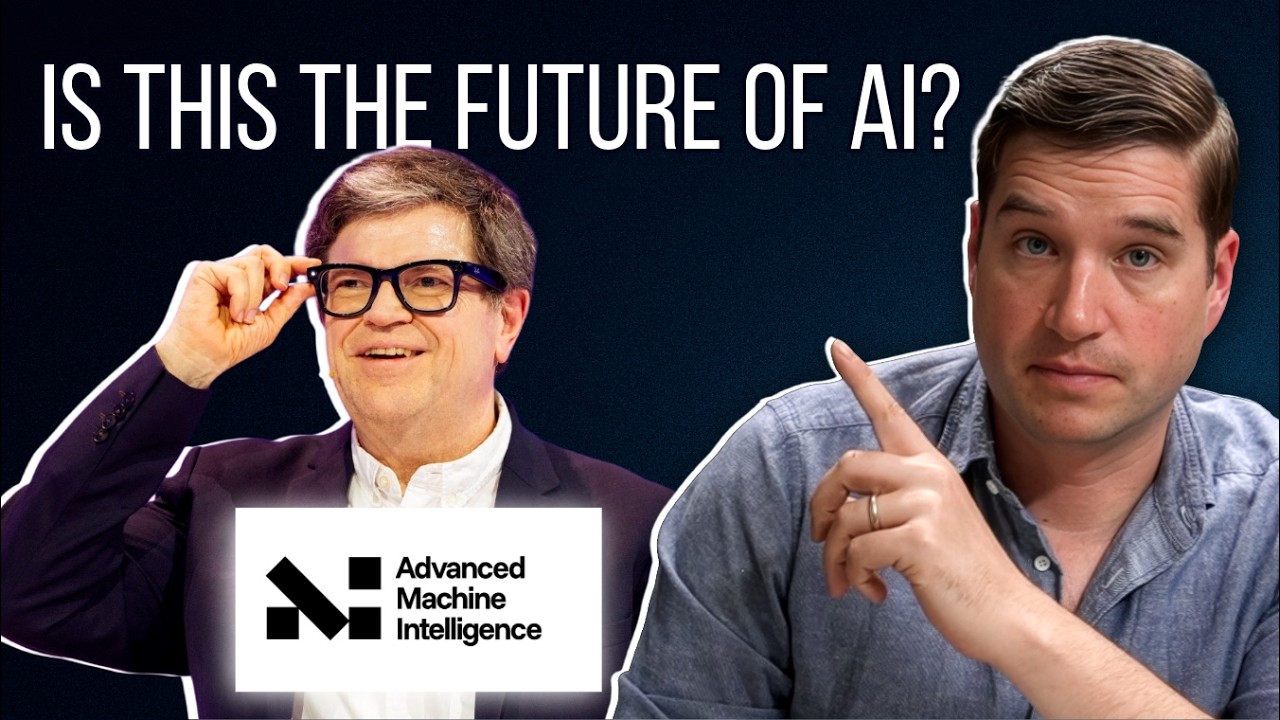
Are LLMs a Dead-End? (Investors Just Bet $1 Billion on “Yes”) | AI Reality Check | Cal Newport
 68 min
Why Is AI Making My Job *Worse*? | Cal Newport
 24 min
Did AI Just Become Sentient? (Not Quite...) | AI Reality Check
Found this useful? Build your knowledge library
Get AI-powered summaries of any YouTube video, podcast, or article in seconds. Save them to your personal pods and access them anytime.
Get Started Free