Key Moments
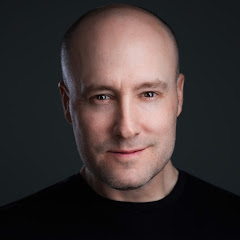
Bill Ackman: Dealing with Haters, My Largest Trade Ever, and Sounding the Alarm for the Government
 The Knowledge Project
Key Moments
Bill Ackman discusses investing, resilience, and navigating market volatility, emphasizing persistence and learning from failure.
Key Insights
Success is a function of how one deals with failure and persists through hardship.
Financial independence and the freedom to express one's views are key drivers.
Long-term investing requires patience, a focus on business quality, and understanding cash flows.
Health, good friends, and a loving relationship are crucial for managing stress and setbacks.
ETFs and index funds play a significant role but necessitate a partnership with activist investors for proper corporate governance.
Short selling, when used to identify fraud, is a valuable market function, but can be harmful if used to intentionally damage businesses.
THE POWER OF PERSISTENCE AND LEARNING FROM FAILURE
Bill Ackman emphasizes that success is not a linear path and is fundamentally determined by how individuals handle failure. He learned the value of persistence from his father and believes that consistent, incremental progress is key to overcoming significant setbacks, whether in business or personal life. This mindset has been crucial in rebuilding after career downturns, focusing on small, daily advancements rather than being overwhelmed by the magnitude of the challenge.
DRIVERS OF SUCCESS: INDEPENDENCE AND PHILANTHROPY
Ackman's primary driver has always been independence, not just financially but also intellectually, allowing him to think and live life on his own terms. He also highlights the learned value of philanthropy, inspired by John Rawls' theory of justice and the 'veil of ignorance.' This principle suggests designing societal structures from a position of not knowing one's own future circumstances, reinforcing the idea of giving back once success is achieved.
INVESTMENT PHILOSOPHY AND STRATEGY
Ackman's investment approach centers on identifying high-quality, simple, predictable, and free cash flow-generative businesses. The focus is on long-term value rather than short-term market fluctuations. His firm, Pershing Square, leverages its permanent capital structure, with a significant portion coming from a public company, to make long-term decisions without the pressure of quarterly redemptions, creating a 'time arbitrage' advantage.
NAVIGATING PERSONAL AND PROFESSIONAL CHALLENGES
Ackman acknowledges experiencing significant personal challenges, including a divorce, which coincided with business difficulties. He stresses the importance of maintaining health through exercise, nutrition, and sleep, as well as having a strong support system of friends and family. These elements are vital for maintaining clarity and balance during stressful periods, enabling better decision-making.
THE ROLE OF INDEX FUNDS AND ACTIVE MANAGEMENT
The rise of ETFs and index funds significantly impacts corporate governance, as these funds hold substantial voting power. While they don't typically lead activist campaigns, increasing ownership puts pressure on them to oversee businesses. Ackman sees a need for partnership between activist investors and index funds to ensure proper governance. He notes the commodity nature of the index fund business and the challenges of providing governance with extremely low fees.
RESPONSIBILITY AND THE SEC’S ROLE
Ackman views short selling as an essential function for market efficiency and fraud detection, crediting short sellers with identifying fraudulent companies. However, he draws a line when short sellers actively seek to harm businesses. He expresses disappointment with the SEC's slow pace in addressing corporate misconduct and advocates for closer collaboration with short sellers to uncover fraud more effectively and swiftly enforce regulations, especially in cases of persistent harmful practices.
THE COVID-19 PANDEMIC: ECONOMIC IMPLICATIONS AND RECOVERY
During the pandemic, Ackman expressed significant concern about the economic implications of shutdowns, emphasizing that the only way to stop a virus is to halt economic activity. He distinguished this temporary, intended shutdown from a depression, noting government support and global efforts to find solutions. He forecasted a slower, but ultimately positive, recovery, with innovation in therapeutic and vaccine development playing a crucial role.
MARKET VOLATILITY AND STRATEGIC HEDGING
Pershing Square implemented a significant hedge against credit risk in anticipation of the pandemic's economic fallout. This strategic move, costing relatively little in premiums, generated substantial value as markets declined. The firm later unwound this hedge, using the proceeds to aggressively buy stocks at depressed prices, demonstrating a willingness to take calculated risks based on a bullish long-term outlook, despite short-term volatility.
LONG-TERM POSSIBILITIES AND CORPORATE GOVERNANCE
Ackman discusses the potential for companies to stay private too long, hindering transparency and external oversight. He advocates for public market discipline, even with its imperfections. He also touches on the possibility of Berkshire Hathaway eventually becoming more actively managed under new leadership, suggesting opportunities for operational improvements within its diverse portfolio of businesses.
THE FUTURE OF RETAIL AND SOCIAL CONNECTION
Ackman believes that despite the challenges posed by the pandemic, people will have a heightened desire for human connection, which could revitalize public spaces like malls. The key is tenant innovation and offering engaging experiences beyond just shopping. He suggests that real estate can adapt by repurposing spaces for mixed uses, catering to the enduring need for social interaction and community gathering.
FINANCIAL PRUDENCE AND THE LESSONS OF CRISIS
The pandemic is expected to instill greater financial prudence, particularly regarding leverage, in individuals and corporations, similar to the psychological impact of the Great Depression. Companies that were over-leveraged prior to the crisis are likely to rethink their capital structures, emphasizing the importance of maintaining cash reserves and avoiding excessive debt to weather future downturns effectively.
THE VALUE OF DIVERSIFIED INSTITUTIONS AND LESSONS FROM BUFFETT
Ackman reflects on the performance of institutions like the CDC during the pandemic, noting both the strengths and weaknesses of democratic systems. He draws inspiration from Warren Buffett's advice on adopting admirable qualities from peers and Buffett's strategic shift from an activist hedge fund to a stable, long-term investment vehicle. Ackman aims to replicate this long-term compounding success with Pershing Square.
Mentioned in This Episode
●Products
●Software & Apps
●Companies
●Organizations
●Books
●People Referenced
Common Questions
Bill Ackman views success as a function of how one deals with failure, emphasizing persistence and making small, compounded progress daily. He highlights the importance of staying sane and balanced through healthy habits like exercise, good nutrition, and sleep, along with a strong support system of friends and family.
Topics
Mentioned in this video
Traditional media source Bill Ackman reads regularly for information intake.
An influential book by John Rawls, which Bill Ackman read in college, shaping his perspective on societal organization and the 'veil of ignorance'.
Traditional media source Bill Ackman reads regularly for information intake.
Traditional media source Bill Ackman reads regularly for information intake.
Traditional media source Bill Ackman reads regularly for information intake.
Media publication Bill Ackman reads for information and perspective.
Traditional media source Bill Ackman reads regularly for information intake.
Mentioned as a country that adopted a shutdown approach for COVID-19.
The first state mentioned by Bill Ackman to implement a shutdown in response to his public case for one.
Referenced repeatedly for its early handling of the COVID-19 pandemic and its aggressive shutdown approach; also a location where Herbalife operated illegally.
Mentioned as a country that adopted a shutdown approach for COVID-19.
Followed California in implementing a shutdown after Bill Ackman's public advocacy.
Mentioned by Bill Ackman as a community where restaurants will eagerly reopen, suggesting a potential venture fund for their revival.
Bill Ackman's wife, with whom he spends evenings reading or watching movies, highlighting the importance of a supportive personal relationship.
A major investment hero for Bill Ackman, influencing his approach to investing and business building, especially the concept of permanent capital.
Mentioned as part of the capable coronavirus team led by the Vice President.
Known for his short trade on the housing market using synthetic CDOs, an example of how short selling can address overvaluation.
Admired by Bill Ackman for his ability to deal with near-catastrophe and take on unbelievable challenges like building car and space companies.
His investment maxims were reinterpreted and presented by Warren Buffett, forming a substantial part of Bill Ackman's investment education.
Mentioned as part of the capable coronavirus team led by the Vice President.
Philosopher whose 'Theory of Justice' and 'veil of ignorance' concept influenced Bill Ackman's views on philanthropy and world organization.
An early supporter and mentor to Bill Ackman, described as a very interesting investment firm partner who prefers to stay out of the headlines.
Mentioned as someone who withdrew $400,000 from Buffett's partnership, which would be billions today, providing an example of missed long-term compounding.
Quoted for his saying, 'capitalism without failure is religion without hell,' emphasizing the importance of creative destruction in markets.
Admired by Bill Ackman for coming out with detailed work about problematic businesses as a short seller.
A four-part Netflix series that Bill Ackman recently watched and found excellent, providing an in-depth look at an ultra-orthodox Jewish community.
Media publication Bill Ackman reads for information and perspective.
Traditional media source Bill Ackman reads regularly for information intake.
Traditional media source Bill Ackman reads regularly for information intake.
A documentary film about Bill Ackman's short position on Herbalife, which he participated in by being interviewed but did not finance or direct.
Television channel where Bill Ackman went to make a public case for a nationwide COVID-19 shutdown and later to deliver a bullish market message.
The institution where Bill Ackman studied, and where he notes many students haven't experienced failure, a critical lesson for success.
Bill Ackman suggests the SEC should work closely with short sellers to uncover fraud and act more quickly and aggressively against companies causing harm.
A news organization that Bill Ackman consumes for information.
Bill Ackman questioned whether it 'failed us' during the COVID-19 pandemic.
Launched an investigation into Herbalife shortly after Bill Ackman's presentation, eventually settling with the company.
Praised by Bill Ackman for their valuable role in identifying fraudulent companies through short selling, as regulators often fail to do so.
Discussed as an index fund manager that receives tens of thousands of proxies and faces challenges in scaling governance resources.
Bill Ackman questioned its visible role and recommendations, particularly regarding a national shutdown, during the COVID-19 pandemic.
Referenced as an 'old-line department store' that hasn't sufficiently innovated, contributing to the challenges faced by malls.
Referenced as an 'old-line department store' that hasn't sufficiently innovated, contributing to the challenges faced by malls.
Bill Ackman's investment firm, known for its concentrated portfolio and long-term ownership approach.
A company Bill Ackman invested in, aiming to put the vote back into the hands of the ultimate shareholder, potentially changing corporate governance.
Criticized for injecting large amounts of capital into private companies like WeWork, enabling them to postpone going public and undermining capital markets discipline.
A company Bill Ackman publicly shorted and accused of being a pyramid scheme operating illegally in China; he criticizes their continued dishonest PR campaigns against him.
A wholly-owned subsidiary of Berkshire Hathaway, identified as a durable and profitable business, though potentially underperforming its competition.
The public company that holds the vast majority of Pershing Square's capital, of which Bill Ackman's firm is the largest shareholder, aiming for long-term compounding.
A company Pershing Square invested in, chosen for its simple, predictable, free cash flow generative business model and durable franchise.
Mentioned in the context of short sellers taking actions to harm a company, which Bill Ackman views as crossing the line beyond just identifying overvaluation.
A news and financial data company that Bill Ackman consumes for information.
Mentioned as an index fund peer to Blackrock, which could differentiate itself by transferring voting rights to underlying holders.
Challenged for having spent billions on stock buybacks prior to the crisis and for needing a bailout, with Bill Ackman arguing against free government money.
Platform Bill Ackman started using as a newsfeed during the coronavirus, finding it helpful for early information.
Cited as an egregious example of poor governance in venture-backed private companies, where founders become 'godlike figures'.
Mentioned as an index fund peer to Blackrock, which could differentiate itself by transferring voting rights to underlying holders.
Expected to contribute to COVID-19 solutions through apps to help with testing and contact tracing.
Cited as arguably the 'worst investment' Warren Buffett ever made, illustrating that even great investors make mistakes.
Streaming platform where Bill Ackman watched the series 'Unorthodox'.
An interesting investment firm run by Joe Steinberg, from whom Bill Ackman learned a great deal.
Cited as an industry that will likely come out stronger due to changing consumer behavior during the pandemic.
A wholly-owned subsidiary of Berkshire Hathaway, discussed as a durable and quality business.
The first insurance company Warren Buffett bought, which formed the foundation of Berkshire Hathaway's insurance business.
Mentioned in the context of Bill Ackman's experience with railroads, comparing it to Burlington Northern Railroad.
Expected to contribute to COVID-19 solutions through apps to help with testing and contact tracing.
Referenced as an 'old-line department store' that hasn't sufficiently innovated, contributing to the challenges faced by malls.
Discussed in detail as a unique and profitable insurance company with diversified wholly-owned subsidiaries, presenting a potential investment opportunity.
More from The Knowledge Project Podcast
View all 100 summaries 132 min
Joe Liemandt: The Future of Education is Better Than You Think
 1 min
1 minWhy Customers Can't Figure Out What You Sell | April Dunford
 2 min
2 minRobinhood CEO Calls Out the Banking Industry's "Stupid Tax"
 2 min
2 min"They Called Us a Broken IPO" | Robinhood CEO
Found this useful? Build your knowledge library
Get AI-powered summaries of any YouTube video, podcast, or article in seconds. Save them to your personal pods and access them anytime.
Get Started Free