Key Moments
Bernie Sanders Interview | Lex Fridman Podcast #450
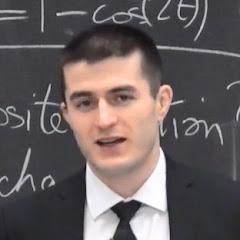 Lex Fridman
Want to know something specific about what's covered?
We've already dissected every moment. Ask and we will deliver (with timestamps).
Key Moments
Bernie Sanders discusses capitalism, healthcare, money in politics, his legacy, and the future of the Democratic party with Lex Fridman.
Key Insights
Widely supported policy ideas like raising the minimum wage and universal healthcare are perceived as radical due to the influence of money in politics and the establishment's narrative.
The U.S. political and economic systems are increasingly oligarchic, driven by concentrated corporate ownership and massive spending by billionaires, overshadowing the needs of working people.
Healthcare is presented as a human right; Medicare for All is proposed as a more efficient and equitable system that would reduce costs for most Americans.
The influence of big money in politics, particularly through Supreme Court decisions like Citizens United, undermines democracy and necessitates a shift to public campaign financing.
While acknowledging the innovations of capitalism, Sanders critiques its hyper-individualistic and profit-driven extreme, advocating for a social safety net that ensures basic needs for all.
The progressive movement within the Democratic Party is crucial for advocating for working-class issues against the influence of corporate interests.
CHALLENGING THE ESTABLISHMENT NARRATIVE
Bernie Sanders argues that his policy proposals, such as raising the minimum wage and ensuring healthcare for all, are widely popular. However, the political establishment, influenced by vested interests, propagates a narrative that the world is unchangeable and individuals lack power. Sanders' presidential campaigns demonstrated that outsider movements can gain significant traction and bring these broadly supported ideas into mainstream discussion, challenging the status quo established by those who benefit from the current system.
THE RISE OF OLIGARCHY AND BIG MONEY IN POLITICS
Sanders and Fridman discuss the growing concentration of wealth and power in the United States, leading to an oligarchic society. Billionaires and large corporations wield immense influence through lobbying and campaign donations, shaping legislation and elections. This is exemplified by the pharmaceutical industry's extensive lobbying efforts, which contribute to high prescription drug prices. The military-industrial complex also operates with vast, unchecked budgets, lacking independent audits, indicating systemic issues beyond individual political corruption.
REFORMING THE HEALTHCARE SYSTEM
A central theme is healthcare as a human right, contrasting the U.S. system with those in other developed nations. Sanders advocates for Medicare for All, a single-payer system that would eliminate out-of-pocket expenses, deductibles, and co-pays, making healthcare affordable and accessible. He argues that this system, by removing the profit motive from insurance and drug companies, would be more efficient and cost-effective, despite requiring progressive tax increases that would ultimately save most individuals money compared to current premiums and out-of-pocket costs.
THE NEED FOR CAMPAIGN FINANCE REFORM
The discussion highlights the detrimental impact of money in politics, particularly after the Supreme Court's Citizens United decision, which allows unlimited spending by corporations and wealthy individuals. Sanders proposes publicly funded elections, where candidates demonstrate broad support through small donations, and the government provides matching funds. This would level the playing field, reducing politicians' dependence on wealthy donors and lobbyists, and fostering a more representative democracy.
CRITIQUE OF HYPER-CAPITALISM AND THE SOCIAL SAFETY NET
Sanders differentiates between capitalism that fosters innovation and one that leads to extreme wealth inequality. He critiques hyper-capitalism, where profits are prioritized over human well-being, leading to a significant redistribution of wealth towards the top 1%. He advocates for a robust social safety net, inspired by Scandinavian models, that guarantees essential services like healthcare, education, and housing, ensuring a decent standard of living for all citizens without stifling innovation or entrepreneurial spirit.
THE PROGRESSIVE MOVEMENT AND THE FUTURE OF THE DEMOCRATIC PARTY
Sanders emphasizes the growth of the progressive caucus within the Democratic Party, led by figures like Alexandria Ocasio-Cortez, as a crucial force representing working-class interests against corporate influence. He acknowledges internal party struggles between these factions and stresses that the Democratic Party's future depends on its ability to effectively address the anger and concerns of working people, rather than being dominated by corporate donors.
LESSONS FROM POLITICAL CAMPAIGNS AND LEADERSHIP
Reflecting on his presidential campaigns, Sanders notes the immense opposition from the Democratic establishment but takes pride in bringing progressive ideas to the forefront and captivating millions. He discusses the difficult choices politicians face, such as supporting candidates with different views to prevent a greater perceived harm, like a Trump presidency. He also draws parallels to historical figures like Eugene V. Debs, illustrating how losing can still lead to societal transformation by laying groundwork for future change.
THE IMPACT OF PERSONAL WEALTH AND POLITICAL INFLUENCE
Sanders addresses criticisms regarding his personal wealth, explaining it stems from book sales and his role as a senator. He asserts that his working-class upbringing significantly shapes his political perspective and that the relief from financial stress due to his current comfort level allows him to focus more effectively on public service, rather than personal gain. He contrasts this with the immense wealth accumulated by others, questioning the necessity and societal benefit of extreme riches.
HOPE AND THE GRASSROOTS MOVEMENT
Despite the challenges of war, divisiveness, and climate change, Sanders finds hope in the people he encounters across the country. He is inspired by the dedication of ordinary citizens, young and old, from diverse backgrounds, who are motivated to improve society. He believes significant change is driven by grassroots movements demanding action, and sees this as the enduring legacy of his political career – empowering people to believe that transformative change is indeed possible.
THE CHALLENGE OF IMMORTALITY AND PHYSICAL WELL-BEING
Nearing the end of the conversation, Sanders contemplates mortality, stating he fears infirmity more than death itself. His personal experience with a heart attack underscored the vulnerability of the body, which concerns him more than the natural end of life. Despite these concerns, his intellectual sharpness and ability to connect with others remain evident, suggesting resilience and continued engagement with critical issues.
Mentioned in This Episode
●Companies
●Organizations
●Concepts
●People Referenced
Wealth Redistribution in the U.S. (Last 50 Years)
Data extracted from this episode
| Category | Amount | Distribution |
|---|---|---|
| Worker Productivity Increase | Massive | Not reflected in worker wages |
| Worker Wages | Same or slightly higher (inflation-adjusted) | Stagnant compared to productivity |
| Wealth Redistribution | $50 Trillion | From the bottom 90% to the top 1% |
| CEO Compensation vs. Worker Pay | 300x | CEOs earn 300 times more than their workers |
| Wealth Concentration | Top 3 individuals | Own more wealth than the bottom half of American society |
Common Questions
Bernie Sanders believes politics should focus on the issues facing people, not on politicians themselves. He feels that discussions about personal likeability or traits distract from the substantive problems that need to be addressed.
Topics
Mentioned in this video
A Supreme Court decision that allowed for unlimited independent political spending by corporations and unions, which Sanders argues has corrupted the political system.
The healthcare reform law passed under President Obama, which Sanders acknowledges as a step but believes is insufficient compared to Medicare for All.
Former union organizer and five-time presidential candidate, a hero of Sanders, who ran from jail and laid groundwork for progressive ideas.
Congresswoman who leads the progressive caucus in the House of Representatives, highly praised by Sanders.
A doctor whose story about his son's emergency room visit and subsequent bill is used to illustrate the high cost of healthcare in the US.
Author of 'The Fighting Soul,' a book about Bernie Sanders' presidential campaign, who documented a meeting between Sanders and Obama.
Sanders supports Biden's domestic policies, viewing them as strong and having achieved some goals despite opposition.
Sanders' proposal for a universal, single-payer healthcare system in the United States, which he advocates as a human right.
A form of society where power is concentrated in the hands of a small group of wealthy individuals, a trend Sanders argues is increasing in the United States.
More from Lex Fridman
View all 551 summaries 232 min
The Rise and Fall of the Roman Empire and the Byzantine Empire | Lex Fridman Podcast #498
 174 min
Biggest Mysteries in Physics: Antimatter, Dark Energy & ToE - Don Lincoln | Lex Fridman Podcast #497
 259 min
FFmpeg: The Incredible Technology Behind Video on the Internet | Lex Fridman Podcast #496
 124 min
Vikings, Ragnar, Berserkers, Valhalla & the Warriors of the Viking Age | Lex Fridman Podcast #495
Ask anything from this episode.
Save it, chat with it, and connect it to Claude or ChatGPT. Get cited answers from the actual content — and build your own knowledge base of every podcast and video you care about.
Get Started Free