Key Moments
Annie Jacobsen on Nuclear War, Intelligence Operations, and Conspiracy Realities
 Conversations with Tyler
Want to know something specific about what's covered?
We've already dissected every moment. Ask and we will deliver (with timestamps).
Key Moments
Annie Jacobsen on nuclear war, intelligence, and conspiracy realities, emphasizing the madness of nuclear doctrine.
Key Insights
Nuclear war is inherently 'madness' due to the potential for civilizational end and the tight decision-making windows for leaders.
Deterrence, while holding for decades, is a fragile system with catastrophic failure points, especially with new nuclear powers.
Many experts in their later years reflect differently on war and defense, often arriving at conclusions of 'insanity' regarding nuclear arsenals.
Current missile defense systems are not equipped to intercept Intercontinental Ballistic Missiles (ICBMs).
Disarmament and communication, exemplified by Reagan and Gorbachev, are crucial for reducing nuclear threats, not solely military buildup.
The line between conspiracy theory and documented reality can blur, especially when dealing with classified government operations and intelligence.
While UAPs are not confirmed as extraterrestrial, some phenomena are tied to dark, controversial human experiment programs.
Government agencies like the Pentagon and CIA operate with different mindsets—systematic control versus individual action—both necessary but imperfect.
THE INHERENT MADNESS OF NUCLEAR DOCTRINE
Annie Jacobsen defines America's nuclear doctrine as 'madness,' primarily due to the unfathomable power vested in a single individual to decide civilization's fate within minutes. She argues that the existence of weapons capable of global destruction and the reliance on deterrence alone are fundamentally irrational. Jacobsen's book aims to detail the horrific reality of nuclear war to foster more informed public discussion and a greater sense of urgency about these weapons.
THE FRAGILITY OF DETERRENCE AND THE RISK OF ACCIDENT
While deterrence has prevented large-scale nuclear exchange for decades, Jacobsen highlights its inherent fragility. The risk isn't necessarily intentional war but accidental launches, miscalculations, or rogue actions, especially from newer nuclear states lacking the long precedent of communication and established norms. The conversation touches upon the uncertainty of presidential decisions in a crisis, with experts suggesting a high probability of retaliatory launch even in ambiguous situations, underscoring the existential risk.
WISDOM IN LATER YEARS: REASSESSING NUCLEAR STRATEGY
Jacobsen observes a recurring theme in her career: elderly defense officials and thinkers often express profound regret or a starkly different perspective on their life's work involving war and weapons. Thomas Schelling, a key Cold War strategist, is cited for his later acknowledgment that nuclear war cannot involve rational men, echoing Jacobsen's central thesis of 'madness.' This shift in perspective suggests a potential for wisdom to emerge from experience, challenging earlier assumptions about military necessity.
MISSILE DEFENSE LIMITATIONS AND THE PURSUIT OF DISARMAMENT
The discussion debunks the notion that current missile defense systems, like the Iron Dome, can effectively counter Intercontinental Ballistic Missiles (ICBMs). Jacobsen emphasizes that these advanced threats travel at extreme speeds and altitudes, rendering existing technologies insufficient for interception. The conversation implicitly supports the pursuit of disarmament, drawing a parallel to Reagan's shift from buildup to diplomacy, suggesting that communication and arms reduction are more viable paths to safety than an arms race or a false sense of security through defense systems.
THE BLURRED LINES OF CONSPIRACY AND INTELLIGENCE REALITIES
Jacobsen navigates the complex terrain of conspiracy theories, differentiating them from documented historical events, particularly within intelligence operations. She recounts instances from her research, like Dr. Bud Whelan's involvement in classified programs, which blur the lines of secrecy and public perception. While she doesn't necessarily endorse all conspiracy theories, her work often delves into areas of government secrecy and operations that fuel public speculation and distrust.
UAPs, HUMAN EXPERIMENTS, AND THE NATURE OF BELIEF
Regarding Unidentified Aerial Phenomena (UAPs), Jacobsen clarifies that her reporting, particularly on Area 51, points to secret human experiment programs rather than extraterrestrial origins. She views the intense public interest in UFOs and related theories as often falling into the category of 'desire' or 'belief,' contrasting it with verifiable facts. She posits that while inexplicable events may occur, they don't necessarily confirm off-world visitors, and some reported phenomena are tied to deeply disturbing human activities.
GOVERNMENT AGENCIES: DIVERSE MINDSETS AND OPERATIONS
Jacobsen contrasts the operational mindsets of different government bodies, such as the Pentagon and the CIA. The Pentagon is described as emphasizing systematic control and order, characteristic of military structure, while the CIA, particularly its operators, is perceived as driven by individual action and initiative. Both, though imperfect, are deemed essential, representing different but complementary approaches to national security and intelligence gathering.
DEEP STATE: COMPLEX INDIVIDUALS BEHIND THE MYTH
When discussing the 'deep state,' Jacobsen advocates for an agnostic approach, emphasizing that individuals within these intelligence and security communities are diverse and complex. She highlights that personal relationships formed during her reporting can reveal a common humanity beneath the cloak of secrecy. Her experiences suggest that motivations are varied, and prejudging individuals based on loaded terms like 'deep state' is dangerous and inaccurate, challenging simplistic portrayals.
THE INFLUENCE OF WRITING AND CIRCUMSTANCE ON CAREER PATH
Jacobsen reflects that her career path into national security, war, and secrets was not predetermined by personal background but largely by fate and circumstance. Her extensive reading, including influences like John Hersey and Cormac McCarthy, has shaped her subconscious approach to storytelling. She finds the dramatic, life-and-death nature of these subjects compelling, driving her continued work as a reporter and author.
FAVORITE FICTION AND THE ONGOING QUEST FOR KNOWLEDGE
Discussing literary and cinematic influences, Jacobsen names 'Moby Dick' or 'Bleak House' as favorite novels and 'Gladiator' as a favorite movie. She acknowledges the potential impact of works like John Hersey's 'Hiroshima' and Cormac McCarthy's 'The Road' on her writing. Looking ahead, she remains secretive about her next book, due soon, maintaining a characteristic veil of classified information, a process she likens to the CIA's approach.
Mentioned in This Episode
●Tools
●Organizations
●Books
●Studies Cited
●Concepts
●People Referenced
Common Questions
Annie Jacobsen argues that understanding the horrific details of nuclear war can provoke necessary conversations and acknowledge the extreme danger. She believes ignoring it doesn't make it less real and encourages people to think about what's important to them.
Topics
Mentioned in this video
Annie Jacobsen's most recent and prominent book, which focuses on the horrific details of nuclear war. It is also being adapted into a screenplay.
Annie Jacobsen's book where she captured the person, not pretense, of Uri Geller.
Annie Jacobsen's book about the CIA's paramilitary operations, featuring Billy Wah as a main character.
A TV series for which Annie Jacobsen co-wrote three episodes.
One of Annie Jacobsen's favorite novels.
Director of Dune, who is directing the screenplay adaptation of Annie Jacobsen's book 'Nuclear War: A Scenario'.
A key figure in Annie Jacobsen's book 'Surprise, Kill, Vanish' about the CIA's paramilitary operations, who became a friend of Jacobsen's after publication.
A Nobel laureate who invented the laser, and who stated unequivocally that an Iron Dome-like system would not work for ICBM defense.
Former director of the CIA's Department of Science and Technology, who was involved in Area 51 and potentially knew about the JFK assassination.
A figure known for purported psychic abilities, whom Annie Jacobsen interviewed and found to be different from his public persona.
A CIA doctor credited with originating the concept of the placebo effect.
A Cold War era expert on nuclear strategy, cited as an example of an expert whose predictions may have been wrong.
Author of 'Hiroshima', cited as a literary influence on Annie Jacobsen's book 'Nuclear War: A Scenario'.
More from Conversations with Tyler
View all 54 summaries 63 min
Luke Burgis on Mimetic Desire, Catholicism, and the Age of Social Contagion
 63 min
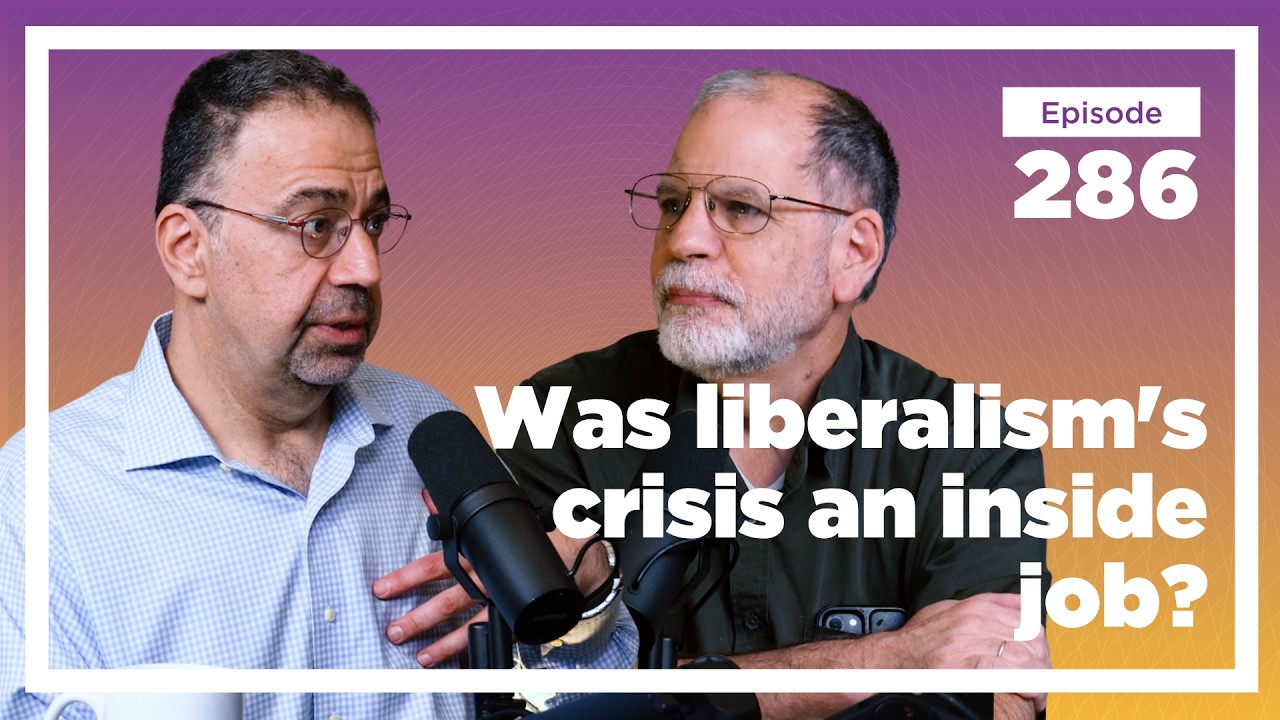
Daron Acemoglu on Liberalism, Automation, and the Educated Elite
 68 min
Julia Ioffe on Russian Women, Missing Men, and the Roots of Autocracy
 64 min
Andrew Graham-Dixon on Vermeer, a Forgotten Sect, and Underrated Artists
Ask anything from this episode.
Save it, chat with it, and connect it to Claude or ChatGPT. Get cited answers from the actual content — and build your own knowledge base of every podcast and video you care about.
Get Started Free