Key Moments
Annaka Harris: Free Will, Consciousness, and the Nature of Reality | Lex Fridman Podcast #326
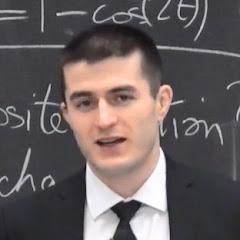 Lex Fridman
Want to know something specific about what's covered?
We've already dissected every moment. Ask and we will deliver (with timestamps).
Key Moments
Free will is an illusion; consciousness constructs this illusion. Physics and neuroscience explore reality's nature.
Key Insights
Free will, as commonly understood (consciousness causing actions), is largely an illusion; the brain's complex decision-making processes are natural phenomena.
Consciousness might not be solely an emergent property of complex brains but could be a fundamental aspect of reality, influencing physics.
Our intuition often misleads us about reality, and shaking these intuitions is crucial for scientific advancement, as seen in historical shifts in understanding.
The concept of 'self' is closely tied to memory and the default mode network in the brain, and this sense of self can be diminished through practices like meditation.
Neuroscience, particularly studies on sensory processing and brain timing (like binding processes), suggests conscious experience is an endpoint of brain processing, not the initiator.
The fundamental nature of reality (space, time, consciousness) is deeply explored by physics and may require new conceptual frameworks beyond current human intuition.
Psychedelic experiences and meditation can quiet the default mode network, leading to profound experiences of interconnectedness and a potential reduction in suffering and anxiety.
The pursuit of truth, even when counter-intuitive or initially unsettling, can ultimately lead to greater psychological well-being and connection, rather than isolation.
THE ILLUSION OF FREE WILL
The conversation challenges the common understanding of free will, positing that the feeling of consciousness actively 'swooping in' to cause decisions is largely an illusion. While the brain engages in complex decision-making processes (which can be termed 'free will' as a shorthand for natural processes), the conscious experience of being the direct cause is often misleading. This perspective suggests that our intuitions about agency and volition are deeply ingrained but may not reflect the underlying deterministic nature of brain activity.
SHAKING INTUITIONS FOR TRUTH
Harris emphasizes the critical role of challenging our intuitions for scientific progress, drawing parallels to historical shifts in understanding like the Earth being round or germ theory. She argues that advancing our understanding of consciousness requires letting go of deeply held, seemingly obvious beliefs. This process is particularly difficult when examining our own minds, as it involves questioning our inherent sense of self and agency, a meta-level introspection that is both challenging and necessary.
CONSCIOUSNESS AND FUNDAMENTAL REALITY
The discussion delves into the nature of consciousness itself, exploring the possibility that it is not merely an emergent property of complex brains but a fundamental aspect of the universe. This perspective, often explored by physicists, suggests that consciousness might be part of the basic fabric of reality from which space, time, and matter emerge. This contrasts with the more conventional view that consciousness arises only in sufficiently complex biological systems, like brains.
BRAIN PROCESSING AND THE CONSTRUCTION OF EXPERIENCE
Neuroscience provides evidence that conscious experience is often the endpoint of significant brain processing, rather than its initiator. Experiments on sensory binding and timing reveal that the brain integrates information over milliseconds before delivering a unified conscious experience. This suggests that our perception of making decisions in real-time, and our sense of conscious will, are constructed by the brain to provide a coherent narrative, rather than direct causal control.
THE ROLE OF MEMORY AND THE SENSE OF SELF
The sense of 'self' is intricately linked to memory and neurological processes like the default mode network. Practices such as meditation or the use of psychedelics can quiet this network, leading to a diminished sense of self and ego. This disruption of the autobiographical self, while potentially unsettling, can also lead to profound experiences of interconnectedness and a reduction in psychological suffering, suggesting that our strong sense of individual self might be more illusory than fundamental.
PSYCHEDELICS, MEDITATION, AND WELL-BEING
The conversation highlights the therapeutic potential of practices that quiet the default mode network, such as meditation and psychedelic-assisted therapy. These experiences can foster a sense of unity with the universe, reduce anxiety and depression, and alleviate suffering by diminishing the perceived boundaries of the self. This suggests that embracing counter-intuitive truths about consciousness and selfhood can paradoxically lead to greater well-being and psychological health.
THE UNIVERSE'S FUNDAMENTAL NATURE
Exploring physics' frontiers, the discussion touches upon concepts like emergent space-time and the holographic principle. It questions whether the universe's fundamental nature is something entirely alien to our sensory experience, suggesting that our perceptions might be a useful, albeit not literally accurate, interface. This perspective implies a reality that is deeply strange, potentially governed by principles far removed from our intuitive grasp, and may require a radical rethinking of our place within it.
SUFFERING, MEANING, AND CONNECTION
The deep-seated nature of suffering in the human condition is acknowledged, and the conversation explores how realizing the illusory nature of the self might offer a path toward greater meaning and connection. By transcending the perceived separateness of the self, individuals may find a profound sense of belonging to the universe, which can be intrinsically positive and reduce existential angst. This perspective suggests that embracing truth, even difficult truths, can ultimately be liberating.
NAVIGATING LIFE'S PATH
Advice for young people emphasizes following passions and cultivating curiosity, regardless of immediate career relevance. The idea is that a genuine pursuit of what inspires can organically lead to a fulfilling life path, even if unconventional. The importance of maintaining wonder and embracing the process of discovery, rather than fixating on a predetermined outcome, is central to forging a life of meaning and pride.
Mentioned in This Episode
●Software & Apps
●Companies
●Organizations
●Books
●Concepts
●People Referenced
Common Questions
Annaka Harris distinguishes free will as the brain's complex decision-making process in nature, while conscious will is the feeling that consciousness itself is driving our actions. The latter is largely an illusion, as decisions originate from underlying brain processing.
Topics
Mentioned in this video
Author of 'Conscious: A Brief Guide to the Fundamental Mystery of the Mind' and guest on the podcast, discussing free will, consciousness, and the nature of reality.
Physicist interviewed by Annaka Harris for her documentary, discussing string theory and holographic principle.
Physicist mentioned by Annaka Harris as interesting and endlessly curious, whom she has interviewed.
Cognitive psychologist and author of 'The Case Against Reality', who argues that our perception is completely detached from objective reality; a frequent discussion partner of Annaka Harris.
Neuroscientist specializing in perception, who describes our experience of the world as a 'controlled hallucination'.
Scientist who conducted research with pea tendrils, observing their coiling behavior and primitive memory.
Physicist interviewed by Annaka Harris for her documentary, discussing string theory, holographic principle, and his view that time is fundamental while space is emergent.
Physicist interviewed by Annaka Harris for her documentary, discussing string theory and holographic principle.
Neuroscientist working on Integrated Information Theory (IIT), whom Annaka Harris has interviewed and considers his work important despite some disagreements.
Science writer and author of 'Spooky Action at a Distance', who provides analogies for understanding complex physics concepts like Ads/CFT Duality.
Indian lawyer, anti-colonial nationalist, and political ethicist who employed nonviolent resistance and is quoted at the end of the podcast.
Neuroscientist and science communicator known for his work on sensory addition and substitution, and who Annaka Harris interviewed for her documentary.
Mathematician who proposes that mathematical forms and shapes are not just structures we think about, but actual objects existing in nature.
Physicist known for his Mindscape podcast, who Annaka Harris interviewed for her documentary, discussing many-worlds interpretation of quantum mechanics.
Evolutionary biologist Annaka Harris hopes to speak with about intuitions on consciousness, although she notes he is not very interested in the topic.
Neuroscientist and psychiatrist who co-developed Integrated Information Theory (IIT), mentioned as part of important work on consciousness.
Plant structures that exhibit complex behavior like coiling and a primitive form of memory when stimulated, used as an analogy for understanding rudimentary decision-making and the origins of conscious experience.
A circuit in the brain largely responsible for the feeling of being a self, which becomes quieted down during meditation and on psychedelic drugs, leading to experiences of losing the illusion of self.
A theoretical conjecture in physics that describes a correspondence between theories of gravity in anti-de Sitter spaces and quantum field theories on their boundaries, implying a holographic nature of reality.
A theory of consciousness developed by Christoph Koch and Giulio Tononi that suggests consciousness could go as deep as particles like electrons, although Annaka Harris has some disagreements with it.
Don Hoffman's book asserting that our perception of reality is an illusion constructed by evolution for survival, not to represent objective truth.
A book by George Musser that explains complex physics concepts, including Ads/CFT Duality, using analogies like music.
Annaka Harris's book exploring evidence that free will is an illusion and how consciousness constructs this illusion.
More from Lex Fridman
View all 550 summaries 174 min
Biggest Mysteries in Physics: Antimatter, Dark Energy & ToE - Don Lincoln | Lex Fridman Podcast #497
 259 min
FFmpeg: The Incredible Technology Behind Video on the Internet | Lex Fridman Podcast #496
 124 min
Vikings, Ragnar, Berserkers, Valhalla & the Warriors of the Viking Age | Lex Fridman Podcast #495
 146 min
Jensen Huang: NVIDIA - The $4 Trillion Company & the AI Revolution | Lex Fridman Podcast #494
Ask anything from this episode.
Save it, chat with it, and connect it to Claude or ChatGPT. Get cited answers from the actual content — and build your own knowledge base of every podcast and video you care about.
Get Started Free