Key Moments
America & World Order: A Conversation with Bret Stephens (Episode #357)
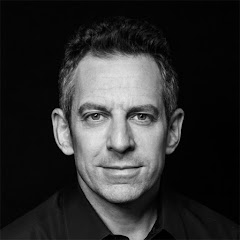 Sam Harris
Key Moments
Bret Stephens and Sam Harris discuss global order, US isolationism, Ukraine, Putin's aggression, and the Gaza conflict.
Key Insights
American isolationism and Republican embrace of autocracy represent a dangerous departure from historical US leadership.
Supporting Ukraine is a strategic imperative for the US, offering a cost-effective way to weaken a geopolitical rival.
Putin's actions, including the death of Navalny and aggression in Ukraine, reveal his expansionary and despotic nature.
Nuclear blackmail should not deter Western support for Ukraine, as Russia has strong incentives against using nuclear weapons.
Criticism of Israel's policies in the West Bank should be distinct from antisemitism and the need for Israel's self-defense.
The conflict in Gaza highlights the complex issue of Palestinian public opinion and the need for decisive action against Hamas.
THE WAXING AND WANING OF AMERICAN LEADERSHIP
The conversation opens by addressing a perceived shift towards American isolationism, particularly within the Republican party. This trend is characterized not just by a desire to de-emphasize the US role as a global policeman, but by an alarming embrace of autocratic regimes and leaders like Putin. This is seen as a strategic misstep, abandoning democratic allies and emboldening adversaries like China. The idea that the US should focus solely on China and sacrifice Ukraine is labeled the 'smart version of wrong,' while the current Republican stance is deemed the 'evil version of wrong' for abandoning a courageous ally that has significantly degraded Russian military capacity without American casualties.
THE STRATEGIC IMPERATIVE OF SUPPORTING UKRAINE
Supporting Ukraine is presented as a matter of vital US self-interest, not just a moral obligation. The argument is made that humbling a dangerous geopolitical rival like Russia on the battlefield, through a proxy, is an incredibly cost-effective investment. The $60 billion aid package, while substantial, represents only 1% of the US federal budget. Failing to support Ukraine is seen as an advertisement to China, encouraging more aggressive postures, and potentially leading to future conflicts in Europe due to treaty obligations. The speaker contrasts the 'smart' strategic calculation with the current Republican approach, which is described as ignorant and damaging to US interests.
THE NATURE OF PUTIN'S REGIME AND NAVALNY'S LEGACY
The discussion delves into the nature of Vladimir Putin's regime, highlighting his brutal suppression of dissent, exemplified by the death of Alexei Navalny. Navalny is remembered not just for his courage but for his potent critique of authoritarianism, serving as a symbol of individual conscience against state power. The regime's actions, including the imprisonment of journalists and the murder of critics, are contrasted with the values of free societies. The potential consequences of failing to hold Putin accountable for Navalny's death are underscored, suggesting it emboldens future dissidents but also weakens the moral standing of democratic nations.
NUCLEAR BLACKMAIL AND RUSSIAN EXPANSIONISM
The fear of nuclear blackmail from Russia is addressed, with the acknowledgment that while the possibility of nuclear weapons use by a rogue state exists, it has not occurred in 75 years. The speaker argues that tactical nuclear weapons are unlikely to be used due to logistical, tactical, and intelligence reasons, including advance warning and the self-destructive nature of such an attack on occupied territory. Furthermore, the idea that Putin would be satisfied with Ukraine alone is dismissed due to Russia's historical expansionism and the nature of dictatorships, drawing parallels to Hitler's territorial ambitions. The current aggression is seen as part of a pattern, not an isolated event.
CRITICISMS OF ISRAEL AND THE GAZA CONFLICT
The conversation shifts to the Middle East, addressing the international perception of Israel following the Gaza conflict. Distinctions are made between valid criticisms of Israeli policies, such as settlement expansion in the West Bank and the deferral of Palestinian statehood, and charges of antisemitism. The isolation of Israel at international bodies like the UN and the ICC is noted. The speaker emphasizes the need for decisive military action against Hamas, while also acknowledging the complexities of Palestinian public opinion. The argument suggests that while criticism of Israeli policy is legitimate, it should not overshadow Israel's existential needs and right to self-defense.
VALID CRITICISMS AND THE NEED FOR A TWO-STATE SOLUTION
The discourse touches upon the charges of apartheid leveled against Israel and the perceived moral confusion surrounding the conflict. It's highlighted that criticisms of Israeli policies, especially concerning the West Bank, should remain distinct from antisemitism. The long-term strategic interests of Israel are considered, alongside the international pressure it faces. The conversation implicitly supports the idea that a resolution to the Palestinian question, potentially through a two-state solution, remains a necessary, albeit currently challenging, pathway forward to achieving lasting peace and security in the region.
Mentioned in This Episode
●Organizations
●Concepts
●People Referenced
Common Questions
The conversation primarily focuses on the current state of global affairs, including the waning American leadership (Pax Americana), the war in Ukraine, the conflict in the Middle East, the influence of Russia and China, and the upcoming US presidential election.
Topics
Mentioned in this video
Newspaper where Bret Stephens works as an opinion columnist.
Palestinian militant organization, the need for its total military defeat is mentioned in the context of the Gaza war.
United Nations, mentioned in the context of Israel's isolation.
The current US presidential administration, with discussion about waning support for the war in Gaza and Biden's age problem.
Region central to the ongoing conflict with Israel, discussed in terms of international perception and Israel's strategic needs.
Country that banned Bret Stephens for life and is discussed in the context of its geopolitical actions and its president, Putin.
Former country, discussed in historical context regarding totalitarianism and its collapse.
Country at war with Russia, discussed extensively regarding US and Republican support, its strategic importance, and the implications of its potential fall.
Geopolitical rival of the United States, discussed as a primary threat that requires US resources, and its potential aggression towards Taiwan.
Territory discussed in relation to Israeli settlements and policies, deemed abusive and detrimental.
Country discussed in the context of the war in Gaza, its international standing, criticisms of its policies, and existential needs.
Host of the Making Sense podcast, discussing current events and geopolitical issues.
Chess grandmaster and human rights activist, suggested not recognizing Putin's legitimacy.
Financier and activist, suggested seizing frozen Russian assets for Ukraine.
Lebanese militant group, mentioned in relation to potential war with Iran.
French writer and philosopher, quoted on the mystery of why people choose to be tyrannized.
Opinion columnist for The New York Times, former editor-in-chief of The Jerusalem Post, and Pulitzer Prize winner.
Previous guest on the Making Sense podcast whose second conversation was found frustrating by some listeners.
Commentator criticized for his perceived fondness for Putin and his reporting from Russia.
Czech dissident and former president, mentioned as an example of an anti-totalitarian intellectual.
More from Sam Harris
View all 292 summaries 34 min
Is Effective Altruism Blind to the Biggest Problems? – Sam Harris & Will MacAskill
 21 min
What Is Technology Doing to Us?
 42 min
Is the Iran War Already Failing?
 90 min
FULL EPISODE: The Politics of Pragmatism and the Future of California (Ep. 464)
Found this useful? Build your knowledge library
Get AI-powered summaries of any YouTube video, podcast, or article in seconds. Save them to your personal pods and access them anytime.
Get Started Free