Key Moments
A Tale of Cancellation: A Conversation with Meg Smaker (Episode #300)
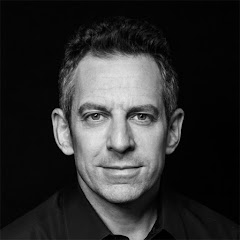 Sam Harris
Want to know something specific about what's covered?
We've already dissected every moment. Ask and we will deliver (with timestamps).
Key Moments
Filmmaker Meg Smaker discusses her documentary "Jihad Rehab" being canceled by woke mobs due to false claims.
Key Insights
Meg Smaker, a former firefighter, was driven to understand global conflicts after 9/11, leading her to solo travels in Afghanistan, Yemen, and Somalia, and eventually to documentary filmmaking.
Her film, "Jihad Rehab" (now "The Unredacted"), explores the rehabilitation of former terrorists in Saudi Arabia, offering a deeply humanizing portrait of these men and their diverse motivations, which often extend beyond religious zeal.
Despite positive initial reception and rigorous ethical vetting, the film faced an organized and dishonest cancellation campaign, primarily from a small group of Muslim documentary filmmakers and the organization Cage.
The campaign's false accusations, including claims of Saudi propaganda, islamophobia, and lack of consent from subjects, led to the film's disinvitation from Sundance, SXSW, and an award rescinded by the San Francisco Documentary Film Festival.
Major institutions like Sundance and Abigail Disney capitulated to the pressure, demonstrating a "failure of moral courage" and setting a concerning precedent for censorship and self-censorship in the independent documentary space.
The cancellation has had devastating personal and financial consequences for Smaker and her crew, many of whom worked pro-bono or for deferred payment, highlighting the vulnerability of independent filmmakers without substantial resources.
FROM FIREFIGHTER TO FEARLESS FILMMAKER: A QUEST FOR UNDERSTANDING
Meg Smaker's journey to filmmaking began unconventionally. A dedicated firefighter, her perspective shifted dramatically after 9/11. The rise of vitriol and hatred in her firehouse prompted her to seek deeper understanding beyond mainstream media narratives. Following her intuition, Smaker independently traveled to Afghanistan, driven by a desire to comprehend the root causes of anti-American sentiment. This early experience in a war-torn country, coupled with a harrowing kidnapping in Colombia, ignited a lifelong quest to understand individuals often labeled as "evil-doers," leading her to challenging environments like Yemen and Somalia to engage directly with individuals often demonized by the media. This relentless pursuit of understanding underpins her unique approach to documentary filmmaking.
THE GENESIS OF "JIHAD REHAB": EXPLORING COMPLEX MOTIVATIONS
Smaker’s documentary, originally titled "Jihad Rehab" and later rebranded "The Unredacted," focuses on a rehabilitation program in Saudi Arabia for former terrorists, many of whom had been detained at Guantanamo Bay. Her initial interest sparked years earlier in Yemen, upon hearing about a Saudi program designed to de-radicalize former jihadists. Despite the conservative nature of Saudi Arabia, this seemingly progressive initiative intrigued her. Gaining unprecedented access, Smaker spent a year meticulously building trust and relationships within the center, interviewing over 150 men. Her goal was to humanize these individuals, presenting them not as one-dimensional villains, but as complex people shaped by diverse motivations.
BEYOND RELIGIOUS EXTREMISM: FOUR PATHWAYS TO JIHAD
Smaker's extensive interviews revealed that the motivations for joining extremist groups were far more varied than popular perception suggests. She identified four primary categories, only one of which was strictly religious. The first, "The Cause," encompasses those driven by a perceived religious duty to defend fellow Muslims, exemplified by a subject who fought in Bosnia. The second motivation was "Economic Necessity," where individuals like Nader saw jihad as a means to earn income and build a career in poverty-stricken regions. "Peer Pressure" constituted the third, with individuals like Ali joining due to the influence of family members, such as an older brother high up in Al-Qaeda. Lastly, "Sense of Adventure," particularly among younger men like Muhammad, attracted those seeking excitement and travel. This nuanced understanding challenges simplistic narratives that solely attribute radicalization to religious ideology.
THE WOKE MOB'S ATTACK: FALSE ACCUSATIONS AND COORDINATED CAMPAIGNS
Despite its compassionate and humanizing portrayal of its subjects, "Jihad Rehab" faced an organized and aggressive cancellation campaign. The attacks began almost immediately after the film's acceptance into Sundance, even before anyone had seen it. Led by a small group of Muslim documentary filmmakers and the organization Cage, the campaign leveled a barrage of false accusations. Initial claims labeled the film as "Saudi propaganda" and "funded by Saudis," despite its critical depiction of the Saudi government. As these claims proved groundless upon viewing, the narrative shifted to accusations of racism, islamophobia, unethical filmmaking practices, and a lack of informed consent from the subjects. Smaker was also criticized for being a "white lady" telling Muslim stories, ignoring her extensive experience and diverse production team.
INSTITUTIONAL CAPITULATION: SUNDANCE, SXSW, AND THE VANGAURD AWARD
The cancellation campaign proved devastatingly effective, leading to unprecedented institutional capitulation. Sundance, the prestigious film festival that had initially accepted "Jihad Rehab," not only failed to defend the film but also subjected Smaker to extensive demands, including special audits and reviews, ultimately apologizing for programming it twice. SXSW, where Smaker's previous film had won a top award, disinvited "Jihad Rehab" despite a signed contract. The San Francisco Documentary Film Festival went further, rescinding a significant "Vanguard Award" that had been offered to Smaker, all based on social media outrage from individuals who had not seen the film. This widespread retreat in the face of external pressure underscored a troubling "failure of moral courage" within the independent film community, as Smaker observed.
ABIGAIL DISNEY'S DEFECTION: A SYMBOL OF WEALTH WITHOUT RESOLVE
Film investor Abigail Disney, an early and crucial supporter of "Jihad Rehab," further exemplified the institutional capitulation. Initially a "filmmaker's dream investor" who recognized Smaker's tenacity, Disney eventually bowed to the pressure. She privately, and then publicly, issued an "abject capitulation to the mob," effectively disavowing the film and pledging support to the very groups attacking it. Smaker, while expressing empathy for the immense pressure Disney faced, critically noted that a person of Disney's immense wealth — a Disney heir — should possess the courage to withstand such campaigns. Her actions, alongside Sundance's, solidified a dangerous precedent where financial security did not translate into moral resolve against weaponized activism.
CONSEQUENCES OF CANCELLATION: PERSONAL AND PROFESSIONAL DEVASTATION
The cancellation had severe and far-reaching consequences for Meg Smaker and her team. She experienced profound emotional and mental distress, including bouts of depression and suicidal ideation, something she had never encountered despite a lifetime of dangerous experiences. Financially, Smaker was "wrecked," losing job opportunities and facing imminent relocation due to inability to afford living in the Bay Area. Beyond her personal plight, many crew members, who had worked for free or deferred payment, saw their career hopes dashed. Illustrators, cinematographers, and editors, particularly those from marginalized groups for whom this was a breakthrough opportunity, faced harassment, bullying, and pressure to remove their names from the credits. This widespread impact underscores the devastating human cost of such campaigns on independent artists.
FIGHTING BACK: REDUCED OPTIONS AND A GOFUNDME CALL TO ACTION
Despite the overwhelming obstacles, Smaker refuses to give up. The traditional distribution channels, including major platforms like Netflix and HBO, have remained silent post-New York Times article on the controversy. Her options are now largely limited to self-distribution, a costly and labor-intensive endeavor. To achieve this, she initiated a GoFundMe campaign to raise funds for essential elements like a professional trailer, posters, and legal fees. Furthermore, she secured an obscure cinema in Glendale, California, for a one-week run to Oscar-qualify the film, preventing it from being further disadvantaged by the cancellation. Smaker holds onto the hope that a successful self-distribution, coupled with positive reception, might still attract larger distributors, allowing her to repay her dedicated team and ensure broad viewership for a film she believes is vital.
THE BROADER IMPLICATIONS: THREAT TO INDEPENDENT FILM
Smaker views her experience as a critical juncture for the independent documentary industry. Historically, the independent space, exemplified by festivals like Sundance, served as a crucial platform for challenging, controversial, and difficult films that would never find a home in traditional studios. However, the capitulation of major institutions to external pressure sets a dangerous precedent. If the industry succumbs to the "Jihad rehab effect," where filmmakers not from a specific community are hesitant to tell stories about it, it risks fostering an environment of self-censorship and prioritizing "safe films." This ultimately stifles honest inquiry, limits diverse perspectives, and undermines the very purpose of independent filmmaking: to provoke thought, foster dialogue, and shed light on uncomfortable truths.
INTEGRITY IN THE FACE OF ADVERSITY: REFUSING TO APOLOGIZE
Throughout the ordeal, Smaker resolutely refused to issue an apology. Despite immense pressure from her own team and industry peers to apologize, she believed it would acknowledge and reinforce the false narratives against her film. After conducting due diligence and finding no ethical breaches, she concluded that apologizing would mean sacrificing her integrity—the "one thing I have left"—after her career, reputation, and finances had been decimated. She expressed frustration that previous filmmakers with more resources had not taken a similar stand, making her, a first-time feature filmmaker, the unlikely standard-bearer against this form of coercion. Unwilling to concede ground to what she perceives as bullying and harassment, Smaker remains unyielding, driven by the conviction that her film is honest and important.
Mentioned in This Episode
●Products
●Software & Apps
●Companies
●Organizations
●Books
●Concepts
●People Referenced
Common Questions
Meg Smaker's film, originally titled 'Jihad Rehab' and now 'The Unredacted,' follows a group of men who, after spending 15 years in Guantanamo, are sent to the world's first rehabilitation center for terrorists located in Saudi Arabia. The film offers a humanizing portrait of these men, exploring their complex motivations and life challenges.
Topics
Mentioned in this video
First country Meg Smaker traveled to after 9/11 to understand the conflict. She also returned in 2004 and discussed warlords and fighters there.
Country where Meg Smaker conducted research on laissez-faire economies and state-building, navigating dangerous, clan-divided areas. She went twice, once while living in Yemen and again for field research.
Country where Meg Smaker traveled on her way to Afghanistan in 2004, where she was followed by secret police due to kidnapping concerns. She also stayed at a firehouse there and later interviewed arms dealers.
Mentioned in the context of potential nuclear war with Ukraine.
Location where firefighters faced extreme challenges during the 9/11 attacks.
Location of the rehabilitation program for former terrorists that Meg Smaker's film is about. Her extensive experiences and access there are discussed.
Country where Meg Smaker lived for over four and a half years, taught firefighting, and learned Arabic, later encountering challenges with landlords and civil unrest.
Northern region of Somalia that declared itself independent but was not internationally recognized, leading to unique economic and political dynamics that Meg Smaker studied.
Mentioned in the context of recent online chatter and concerns about nuclear war with Russia.
Capital city of Somalia, described as chaotic and divided by clans, which Meg Smaker navigated using her understanding of local systems.
Country where Meg Smaker was kidnapped at 23, an experience that became a catalyst for her desire to understand 'evil-doers.'
Host of the podcast, who introduces the episode and interviews Meg Smaker.
Mutual friend who put Meg Smaker on Sam Harris's radar, leading to the podcast interview.
American journalist who was kidnapped and murdered in Pakistan in 2002, mentioned by Sam Harris to highlight the dangers Meg faced.
Director of 'Fog of War', whose film was surprisingly on the syllabus at an Al-Qaeda training camp.
Film critic for the LA Times who is a prominent Muslim and publicly supported 'Jihad Rehab' after seeing it and having spent time in Saudi Arabia.
Writer for The Atlantic, possibly doing an article on Meg Smaker's story. Meg also listened to his podcast episode.
Comedian with a large following, mentioned as someone who could successfully self-distribute content due to his built-in audience.
A documentarian with an unusual backstory, whose film 'Jihad Rehab' (now 'The Unredacted') faced a significant cancellation campaign.
Journalist who wrote a significant piece about Meg Smaker's story for The New York Times, described as an 'old school investigative journalist' who was very thorough.
Leader of Al-Qaeda, mentioned in the context of Khalid's interview where he recounted being with Bin Laden on 9/11.
Filmmaker and heiress who was an early and significant investor in 'Jihad Rehab,' but later publicly apologized for her involvement after the controversy, an act Meg viewed as cowardly.
Former President of Yemen mentioned as being in power during Meg Smaker's time there when the Houthis were an issue.
Comedian mentioned as someone who has been 'canceled' but has sufficient resources to weather the storm, unlike Meg Smaker.
Comedian mentioned as having famously rebooted his career by self-distributing his material after being 'canceled.' Meg references his joke about finding out who your real friends are after cancellation.
Expert whom Meg Smaker consulted with and sent her film to, indicating his knowledge of the subject matter.
Podcaster mentioned as someone who has been 'canceled' but has sufficient resources to weather the storm, unlike Meg Smaker.
British ISIS member known for beheading Westerners, whose actions were controversially attributed to British government mistreatment by CAGE.
Expert whom Meg Smaker consulted with and sent her film to, indicating his knowledge of the subject matter.
Publication that covered Meg Smaker's story about the cancellation of her film. Meg also references them when describing misrepresentations of places like Yemen/Afghanistan.
Publication that ran an article containing false information about 'Jihad Rehab', including claims of danger to the men and unethical filmmaking practices; they refused Meg Smaker an interview and insisted on written responses.
Marxist rebel group in Colombia, whose actions against landowners were countered by the AUC, leading to cycles of violence Meg witnessed.
Publication where Graham Wood works, possibly covering Meg Smaker's story.
International financial institution whose funding, or lack thereof, influenced the economic and political system in Somaliland according to Meg Smaker's research.
The New York fire department whose members Meg Smaker trained with, highlighting the extended family nature of firefighting.
Organization to which Sundance suggested Meg Smaker extend an invitation to discuss her film with its critics; they declined to meet or screen the film.
Rebel group in Yemen mentioned as an issue during Meg Smaker's time there, with bombings occurring outside the city.
Terrorist organization; a main character in Meg Smaker's film was a bomb maker for Al-Qaeda. Also mentioned as having a training camp with a documentary syllabus.
University where a professor wrote to the Doc Edge festival protesting the screening of Meg Smaker's film without having seen it.
Activist group described as a 'stealth islamist organization' that attacked 'Jihad Rehab.' They promote a narrative that all Guantanamo detainees are innocent and attack any work that challenges this.
Paramilitary group that kidnapped Meg Smaker in Colombia, known for horrific violence against FARC sympathizers.
Meg Smaker's documentary film, originally titled 'Jihad Rehab,' about a rehabilitation program for former terrorists in Saudi Arabia. It was accepted by major film festivals but then disinvited due to a defamation campaign. Now retitled 'The Unredacted.'
Film franchise used by Meg Smaker to describe the exaggerated perception of danger in places like America (or Yemen/Afghanistan) if only news reports were consumed.
Film mentioned by Meg Smaker as an example of a brilliant, challenging work that never would have been made in a studio environment but was possible in the independent space.
Documentary by Errol Morris that was on the syllabus at an Al-Qaeda training camp, according to an interviewee in Meg's film.
Meg Smaker's previous film made in Cuba before her latest project in Saudi Arabia.
The new title for Meg Smaker's documentary film, formerly known as 'Jihad Rehab,' adopted after the controversy.
Abigail Disney's production company, through which she invested in Meg Smaker's film.
Hotel chain where Pakistani secret police put Meg Smaker up after fearing for her safety, which was bombed shortly after.
New animation company in Brazil, run by two women, whose work on 'Jihad Rehab' was meant to launch their careers before the film's cancellation.
Crowdfunding platform Meg Smaker uses to raise money for the distribution and marketing of her film after its cancellation.
Social media platform described as a 'cesspool of horribleness' by Meg Smaker, where nuanced conversations are difficult and much of the vitriol against her film occurred.
Television network and streaming platform mentioned as a potential traditional distributor for 'The Unredacted' (formerly 'Jihad Rehab').
Newspaper where film critic Lorena Lee works, who publicly supported Meg Smaker's film.
Streaming giant mentioned as a potential distributor for Meg Smaker's film, although it has not happened yet.
Criticism leveled against Meg Smaker, a white filmmaker, for telling stories about Muslims, despite her deep experience and collaboration with Muslim individuals.
Economic theory Meg Smaker researched and observed in Somaliland, where the lack of international recognition led to a more organic and healthy relationship between the government and local businesses.
Publication that printed an article with 42 factual errors about 'Jihad Rehab' written by one of the film's attackers, which they refused to correct.
Paper written by Meg Smaker based on her time in Somalia, discussing the benefits of the non-state system in Somaliland.
Major trade publication that initially gave 'Jihad Rehab' universally positive reviews, but later changed their wording under threat of lawsuit.
Major trade publication that initially gave 'Jihad Rehab' universally positive reviews, but later changed their wording under threat of lawsuit.
More from Sam Harris
View all 302 summaries 27 min
Is America Heading for a Debt Crisis? An Economist Explains
 27 min
Is America Heading for a Debt Crisis? An Economist Explains
 34 min
Is Psychedelic Therapy Ready for FDA Approval?
 26 min
You Lose Interest the Moment You Realize It's AI
Ask anything from this episode.
Save it, chat with it, and connect it to Claude or ChatGPT. Get cited answers from the actual content — and build your own knowledge base of every podcast and video you care about.
Get Started Free