Key Moments
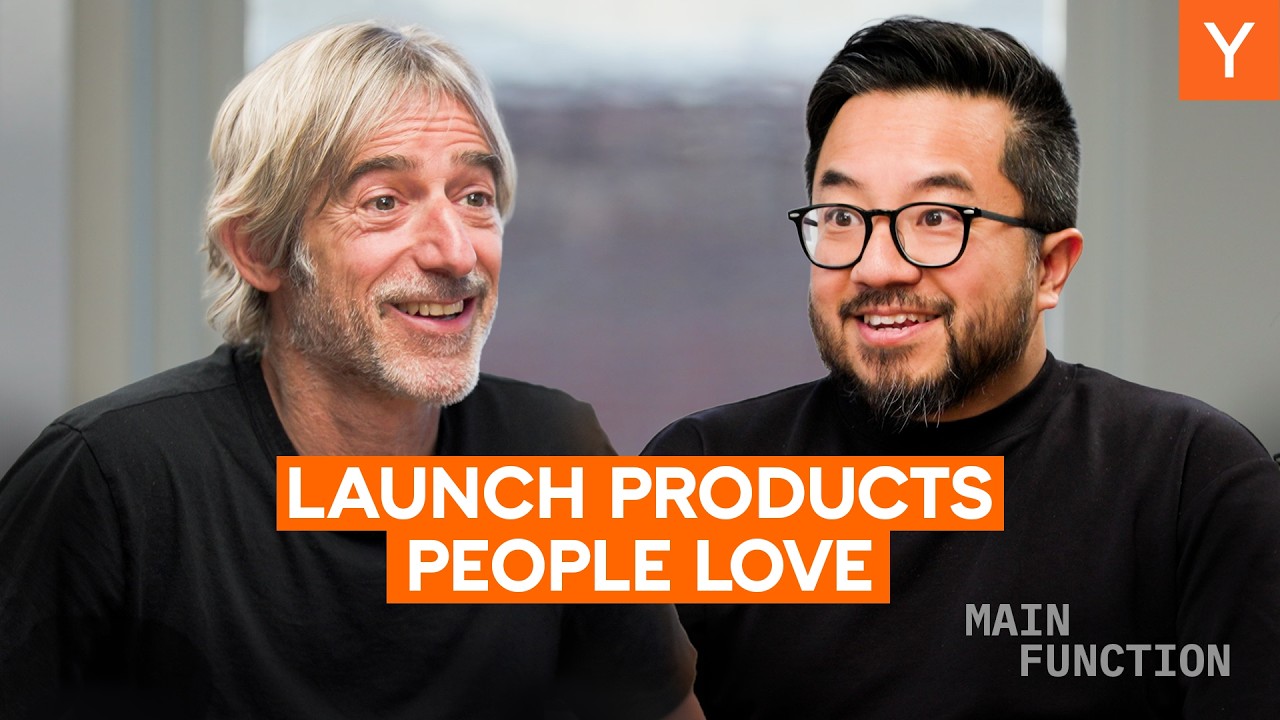
A Conversation with Elizabeth Iorns - Advice for Biotech Founders
 Y Combinator
Want to know something specific about what's covered?
We've already dissected every moment. Ask and we will deliver (with timestamps).
Key Moments
Biotech founder Elizabeth Iorns discusses Science Exchange, the shift from academia to startups, and advice for new founders.
Key Insights
The biotech industry faces unique challenges due to long development cycles and regulatory hurdles, contrasting with software startups.
Science Exchange was founded to address the fragmentation and inefficiency in outsourcing scientific research, acting as a curated marketplace.
Transitioning from academia to entrepreneurship requires overcoming institutional IP policies and building a viable business case.
The reproducibility crisis in science highlights issues with assay validation and documentation, a problem Science Exchange's initiative aims to address.
Marketplace success hinges on building trust, ensuring quality control, and attracting both supply and demand sides, especially in the B2B sector.
Recent advancements in gene and cell therapies are creating unprecedented opportunities in biotech, attracting experienced industry professionals to found new startups.
THE JOURNEY FROM ACADEMIA TO STARTUP FOUNDER
Elizabeth Iorns, a cancer biologist by training, transitioned from academia to entrepreneurship by identifying a significant problem in scientific research: extreme inefficiency and fragmentation in outsourcing experiments. Her experience founding Science Exchange, initially called 'The Bench,' stemmed from her own struggles to find specialized services and collaborators. This shift was not straightforward, involving navigating university intellectual property policies and a lack of established role models for tech startups in Miami at the time. She learned about Y Combinator through Wired magazine, applying as an outsider which ultimately led to her launching Science Exchange.
SOLVING MARKET FRAGMENTATION WITH SCIENCE EXCHANGE
Science Exchange was created as an online marketplace to organize the fragmented research services market. Before its existence, scientists had to individually contract with labs, a process that was time-consuming, inefficient, and lacked transparency in pricing and quality. Iorns highlights that a single experiment could vary tenfold in cost due to this lack of information. Science Exchange addresses this by providing a curated platform where providers are qualified, and project management, confidentiality, and intellectual property are managed, simplifying the procurement of research services for its users.
NAVIGATING ACADEMIC IP AND THE RISE OF BIOTECH STARTUPS
A significant hurdle for academics moving into startups is navigating university policies regarding intellectual property. Iorns notes that universities often own the research output, making it challenging to spin out ideas. While some universities are becoming more startup-friendly, it remains an obstacle. She also observes a global trend of increased willingness for scientists to create companies. This trend is facilitated by broader entrepreneurship as a viable career path and the development of supportive infrastructure like incubators, shared lab spaces, and platforms that lower the barriers to entry for scientific ventures.
BUILDING A TWO-SIDED MARKETPLACE AND ACHIEVING PRODUCT-MARKET FIT
Launching a two-sided marketplace, like Science Exchange, presents unique challenges in attracting both supply (service providers) and demand (researchers). Iorns emphasizes the need for an MVP approach and the critical step of building a curated marketplace with quality assurance. For Science Exchange, attracting supply was easier as providers sought efficient ways to gain clients. Demand, particularly from larger pharmaceutical companies, took longer to secure. Product-market fit was confirmed when a major client, Amgen, adopted the platform for entire sectors of their discovery research, validating its ability to automate processes and provide business intelligence.
THE REPRODUCIBILITY INITIATIVE AND ITS IMPACT
Science Exchange's Reproducibility Initiative aims to improve the quality and efficiency of scientific research by validating published findings. This project, though controversial, tackles the issue of non-reproducible results, which Iorns attributes to factors like inadequate assay validation and a lack of rigorous documentation common in academia compared to industry standard operating procedures. The initiative, particularly its work replicating published studies for pharmaceutical companies and public foundations, has a high-profile impact, increasing visibility and opening doors for crucial partnerships and trust within the scientific community.
BIOTECH VS. SOFTWARE STARTUPS AND FOUNDER ADVICE
Biotech and software startups share similarities in people management and funding needs, but differ significantly in their go-to-market and product development. Biotech's outcome is determined by science, with key inflection points in clinical trials, whereas software allows for more iterative pivoting. An MVP in biotech is hard to define and often tied to demonstrating scientific validation. Iorns advises founders to avoid delaying critical experiments, seek co-founders who are collaborative problem-solvers rather than just business experts, and recognize their strengths. For non-scientists, gaining lab experience or focusing on areas like bioinformatics can be pathways into the biotech startup world.
THE EVOLUTION OF BIOTECH AND FUTURE OPPORTUNITIES
The biotech industry is experiencing a renaissance driven by unprecedented capital investment and scientific advancements in therapeutic modalities like gene and cell therapies. This convergence of capital and innovation is attracting individuals with strong industry experience to found new companies. Historically, biotech exits often involved acquisition by larger firms, but recent trends, supported by increased funding and streamlined FDA processes (especially for rare diseases), allow some companies to commercialize their products independently, building their own sales and distribution channels.
EMERGING TECHNOLOGIES AND ENABLING INFRASTRUCTURE
Enabling technologies are playing a crucial role in accelerating biotech innovation. Companies are productizing services that were once expensive and complex, such as regulatory consulting for FDA submissions. This trend mirrors the development of the software industry, where platforms and tools have democratized company creation. Iorns believes that such infrastructure will streamline the path from discovery to market, making it more efficient for new biotech ventures to navigate the scientific and regulatory landscape and ultimately bring life-changing therapies to patients.
Mentioned in This Episode
●Software & Apps
●Companies
●Organizations
●Studies Cited
●Concepts
●People Referenced
Biotech Startup Advice: Dos and Don'ts
Practical takeaways from this episode
Do This
Avoid This
Common Questions
Science Exchange is an online marketplace designed to streamline the process of outsourcing scientific experiments. It addresses the inefficiencies and fragmentation in scientific research by connecting scientists with qualified providers, managing projects, and ensuring quality.
Topics
Mentioned in this video
Institution where Elizabeth Iorns worked as an assistant professor and conducted her postdoc.
An organization that provides cost-effective lab space by the bench, lowering barriers to entry for biotech startups.
Foundation involved in a reproducibility project with Science Exchange, which is one of their most followed projects.
Institution where Elizabeth Iorns obtained her PhD in cancer biology.
A facility that provides cost-effective lab space by the bench, lowering barriers to entry for biotech startups.
The U.S. Food and Drug Administration, which regulatory development strategies and productized regulatory infrastructure are discussed in relation to biotech startups.
Organization that Science Exchange worked with to do reanalysis of epidemiology results.
A company chaired by Elizabeth Iorns, which recently went through Y Combinator.
A company that has helped build infrastructure making it easier for people to create companies.
A large pharmaceutical company that used Science Exchange for all of its discovery research, signifying product-market fit. Also mentioned for its successful migraine drug.
A company funded by Y Combinator that provides productized FDA regulatory processes for biotech startups.
An online marketplace for outsourcing science experiments, founded by Elizabeth Iorns. It aims to improve the quality and efficiency of scientific research by connecting researchers with service providers.
A modern version of Elance and oDesk, representing the application of a marketplace model to connect experts with clients.
A startup accelerator that Elizabeth Iorns' company, Science Exchange, was part of in the summer of 2011. She is also a part-time partner, advising hundreds of biotech companies.
A biotechnology company mentioned as a pioneer in the field of biologics (antibodies and proteins).
A platform similar to Upwork, which Iorns and her co-founder looked at for inspiration when developing Science Exchange.
A biotech company founded by non-scientific founders who self-taught themselves about the sector. They are motivated by a personal connection to find therapeutics for glioblastoma.
A business model involving connecting buyers and sellers, which is the foundation of Science Exchange. Running a marketplace presents unique challenges, particularly in balancing supply and demand.
An older technique for analyzing gene expression profiling that Elizabeth Iorns used in her breast cancer research. Its inefficiency and fragmentation were factors that inspired Science Exchange.
A category of therapeutic modalities including antibodies and proteins, which became prominent after small molecule inhibitors.
A traditional type of therapeutic modality in biotech, which was the primary option before recent advancements.
A type of therapeutic modality that has recently seen approvals, representing a turning point for the biotech industry.
A type of therapeutic modality that has recently seen approvals, representing a turning point for the biotech industry.
A type of brain cancer for which the founders of Notable Labs are seeking new therapeutics, driven by a personal connection.
An approved marketable product that represents a recent therapeutic modality and a turning point for the biotech industry.
Cancer biologist by training, founder of Science Exchange, Chairman of Reformer Therapeutics, and part-time partner at Y Combinator. She advises biotech companies and shares insights on running marketplace companies and the biotech startup landscape.
Co-founder of Y Combinator who initially told Elizabeth Iorns she wouldn't get in due to lacking a technical co-founder.
More from Y Combinator
View all 602 summaries 33 min
India Can Create The Largest AI Companies
 41 min
Zynga Founder: Consumer Is Not Investible Right Now - Thats Why You Should Build It
 43 min
The Age Of The 40-Year-Old Solo Founder Is Here
 31 min
Groww: If Your Customers Don't Love It or Hate It, You've Already Lost
Ask anything from this episode.
Save it, chat with it, and connect it to Claude or ChatGPT. Get cited answers from the actual content — and build your own knowledge base of every podcast and video you care about.
Get Started Free