Key Moments
A Brief History of the Open Source AI Hacker - with Ben Firshman of Replicate
 Latent Space Podcast
Key Moments
Ben Firshman discusses Replicate's journey, building AI tools, open source, and the evolution of AI development.
Key Insights
Replicate aims to make AI models accessible to software engineers, bridging the gap between researchers and developers.
The "hacker" ethos is core to Replicate's culture, emphasizing building, tinkering, and community.
Open source is crucial for AI development, enabling customization, fine-tuning, and broader adoption.
The AI developer landscape is expanding rapidly, with a growing need for tools and abstractions.
GPU availability and optimization remain critical challenges in scaling AI infrastructure.
Replicate's success stems from its ability to aggregate demand and provide a standardized platform for AI model deployment.
THE HACKER ETHOS AND BUILDING FOUNDATIONS
Ben Firshman, co-founder and CEO of Replicate, identifies as a builder and tinkerer, drawing transferable skills from hands-on real-world projects like electronics and car repair to software development. This philosophy extends to his approach to software design, emphasizing low latency and robust interfaces, akin to physical machines with tangible feedback. Experiences with tools like Fig and Docker Compose highlight the importance of immediate responsiveness in user interfaces, a principle he applied to Replicate's development.
EVOLVING THE CLI AND THE BIRTH OF REPLICATE
The discussion touches on the evolution of Command Line Interfaces (CLIs), moving from machine-centric tools to human-friendly conversational interfaces. Firshman's past work, including the "Command Line Interface Guidelines" and his role at NFI CLI, informed his views on creating more interactive and intuitive command-line experiences. This journey also led to Archive Vanity, a project born from frustration with the archaic PDF-based scientific dissemination, which indirectly sparked the genesis of Replicate by highlighting the need for better tools in scientific research.
FROM SCIENTIFIC DISSEMINATION TO ML MODEL CONTAINERS
The frustration with academic PDFs and paywalls led Firshman and co-founder Andreas to develop Archive Vanity, aiming to make scientific papers more accessible. This experience, coupled with Andreas's challenges at Spotify using machine learning models from research papers, led to the hypothesis of containerizing ML models. The idea was to create a standardized format (later formalized as Cog) that would allow researchers to package their models, making them easily shareable and runnable by others, thus solving the problem of reproducibility and deployment.
NAVIGATING STARTUP CHALLENGES AND THE YC EXPERIENCE
Replicate's early days involved a challenging pivot from a benchmarking tool for researchers to a viable business. Their Y Combinator batch, coinciding with the COVID-19 pandemic, presented unique hurdles, including a lack of product-market fit and the cancellation of traditional demo days. Despite early stumbles and attempts at unrelated projects during the pandemic, YC's value lay significantly in its post-batch support, particularly in fundraising and customer acquisition through its vast network of alumni companies.
THE RISE OF GENERATIVE AI AND REPLICATE'S ACCELERATION
The inflection point for Replicate arrived with the explosion of generative AI, particularly with the release of Stable Diffusion and later LLaMA 2. The open-source nature of these models allowed for rapid iteration, fine-tuning, and community-driven innovation. Replicate found its niche as the platform where these tinkerers and developers could easily run and share their models, becoming the interface layer between AI experts and a burgeoning community of product builders eager to leverage these new AI capabilities.
CO-CREATING THE AI INFRASTRUCTURE ECOSYSTEM
Replicate's technical foundation, Cog, emerged from the need for a standardized, production-ready format for machine learning models, building upon Docker's principles but abstracting away complexity. This open standard allows for interoperability with tools like Hugging Face Transformers and local execution environments. The company focuses on providing a scalable, reliable infrastructure, aggregating demand to secure GPU access and offering APIs that cater to both individual developers and large enterprises, effectively acting as a compute provider and a crucial piece of the AI tooling ecosystem.
OPEN SOURCE PHILOSOPHY AND THE FUTURE OF AI DEVELOPMENT
Firshman emphasizes that Replicate's core value lies in supporting open-source AI, enabling developers to not just use models but to customize and fine-tune them. While acknowledging the evolving licensing models in AI, he advocates for sustainable approaches that allow creators to monetize their work while fostering an ecosystem where experimentation and accessibility thrive. He advises aspiring AI engineers to embrace continuous learning and hands-on experimentation, seeing the current landscape as analogous to the early days of the internet for software developers.
Mentioned in This Episode
●Software & Apps
●Companies
●Organizations
●People Referenced
Common Questions
Replicate is a platform that makes it easy for developers to run and deploy machine learning models. It addresses the complexity of setting up infrastructure and running models, allowing users to access powerful AI without deep expertise.
Topics
Mentioned in this video
A platform that allows developers to easily run and deploy machine learning models, particularly in the generative AI space.
A company/product founded by Ben Firshman that aided in command-line interface autocompletion, later acquired and became part of Docker Compose.
A company whose models are offered on Replicate, highlighting competitive pricing and performance in the LLM market.
Releasing LLaMA 2, a significant open-source model that has driven growth for Replicate and the broader AI ecosystem.
The company that created CLIP, a foundational model that spurred innovation in image generation by enabling people to combine it with GANs.
A company similar to Replicate, but focused on aggregating demand for GPU resources for AI model training.
A company utilizing Replicate, indicating the platform's versatility across different AI applications.
A key investor and partner for Replicate, providing access to GPUs essential for AI workloads.
A startup accelerator program that Ben Firshman and his team went through, providing valuable connections and support post-batch.
The institution that hosts arXiv, highlighting arXiv's long history and limited funding compared to commercial scientific journals.
The physics institution where the World Wide Web was invented, serving as a historical parallel for the purpose of sharing academic writing.
A media company using Replicate's services, showcasing a larger customer base leveraging AI tools for content creation or other applications.
An AI image generation service that originated from early experiments with Vugan-CLIP in Discord communities, highlighting the platform's potential.
An open-source, high-quality generative image model that significantly boosted Replicate's user adoption and innovation in the AI space.
A tool for defining and running multi-container Docker applications, which evolved from Ben Firshman's work at Fig.
An open-source model used by Unsplash to generate text descriptions for images in their catalog, facilitated by Replicate.
A tool used by Replicate to compile machine learning models for faster inference, applied to models like Stable Diffusion.
Mentioned in relation to the origin of the 'Hacker in Residence' job title, which Replicate adopted.
A programming language noted for its fast startup times, contrasted with Python for building low-latency CLI applications.
A command-line interface for which Ben Firshman had thoughts on its design principles, particularly regarding state machines and fulfilling preconditions.
A successful CLI implementation for a coding agent that highlighted the underestimated power of the command line interface.
A standardized format for packaging machine learning models as Docker containers, designed to simplify deployment and inference.
A tool created by Ben Firshman and Andreas to convert PDFs of scientific papers into HTML, aiming to improve science dissemination.
An open-access archive for scientific preprints, notably in math, physics, and computer science, which inspired the creation of Archive Vanity.
An open-source experiment tracking tool that was originally named Replicate before the company pivoted.
A popular image generation model created by RiversHaveWings, utilizing CLIP capabilities and inspiring early tinkering in online communities.
A browser extension that provided a better user experience on top of arXiv.
A stock photo platform using Replicate to annotate its image catalog with text descriptions, enabling better searchability.
An early image generation model developed by Aiad Noun, influenced by CLIP and GANs, contributing to the generative art community.
An inference server used by Replicate for serving language models, contributing to optimized performance.
An early image generation model published on Replicate, known for its pixel art output and contributing to the platform's community growth.
A large language model released by Meta, which significantly drove growth for Replicate due to its open nature and trainability.
An NVIDIA library used by Replicate for optimizing and deploying deep learning models, particularly for inference.
Founder of Docker, who advised Ben Firshman on the post-YC value of staying connected with the Y Combinator network.
A batch partner at Y Combinator who provided significant help to Replicate, particularly in fundraising and customer acquisition.
Mentioned as a competitor in the context of AI tooling, relevant to the wave of indie hackers and businesses adopting AI.
The text provided references 'Peter levels' which might be a misinterpretation by the ASR. Assuming the reference is to Peter Thiel, given his prominence in tech and investment discussions.
More from Latent Space
View all 203 summaries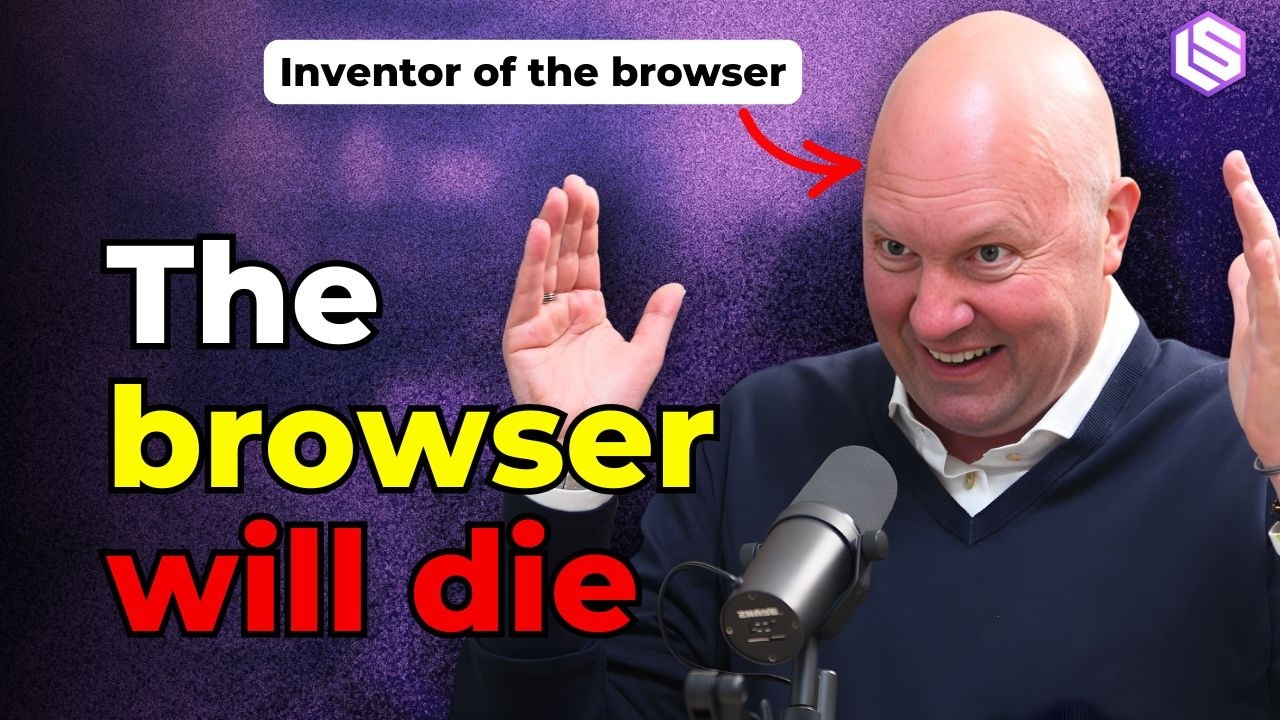 77 min
Marc Andreessen introspects on Death of the Browser, Pi + OpenClaw, and Why "This Time Is Different"
 67 min
Moonlake: Multimodal, Interactive, and Efficient World Models — with Fan-yun Sun and Chris Manning
 38 min
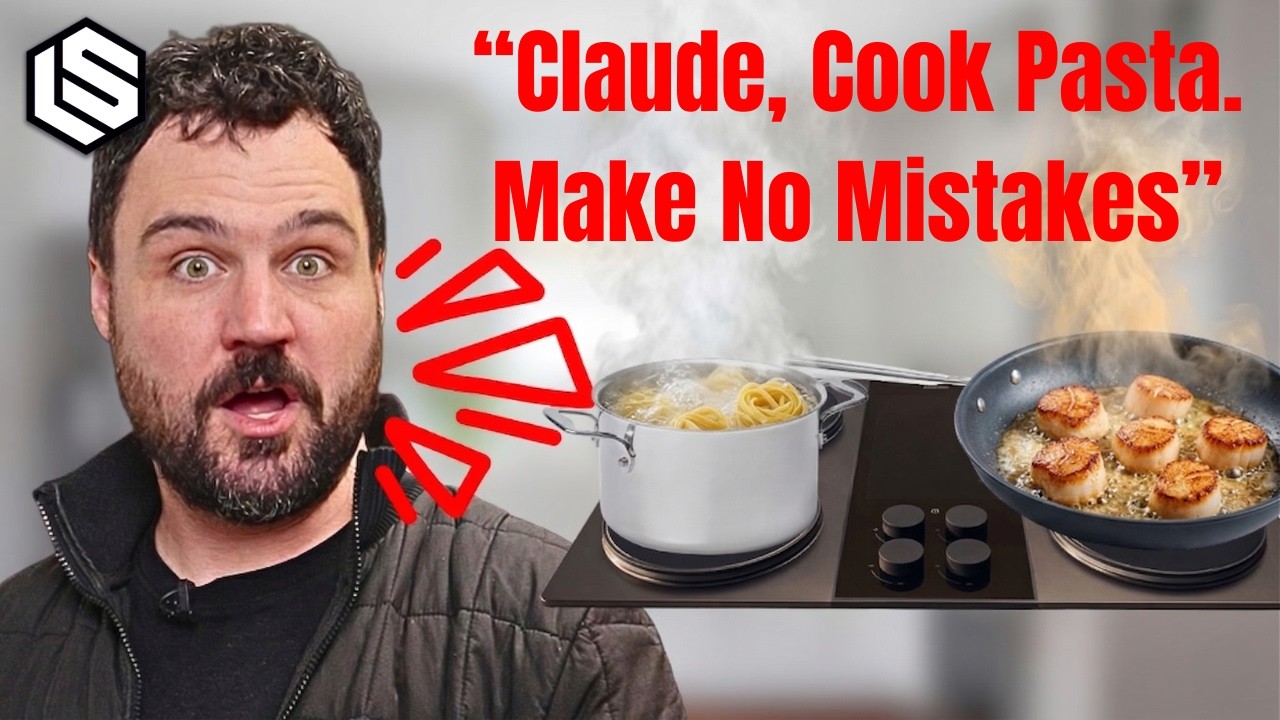
The Stove Guy: Sam D'Amico Shows New AI Cooking Features on America's Most Powerful Stove at Impulse
 55 min
Mistral: Voxtral TTS, Forge, Leanstral, & Mistral 4 — w/ Pavan Kumar Reddy & Guillaume Lample
Found this useful? Build your knowledge library
Get AI-powered summaries of any YouTube video, podcast, or article in seconds. Save them to your personal pods and access them anytime.
Get Started Free