Key Moments
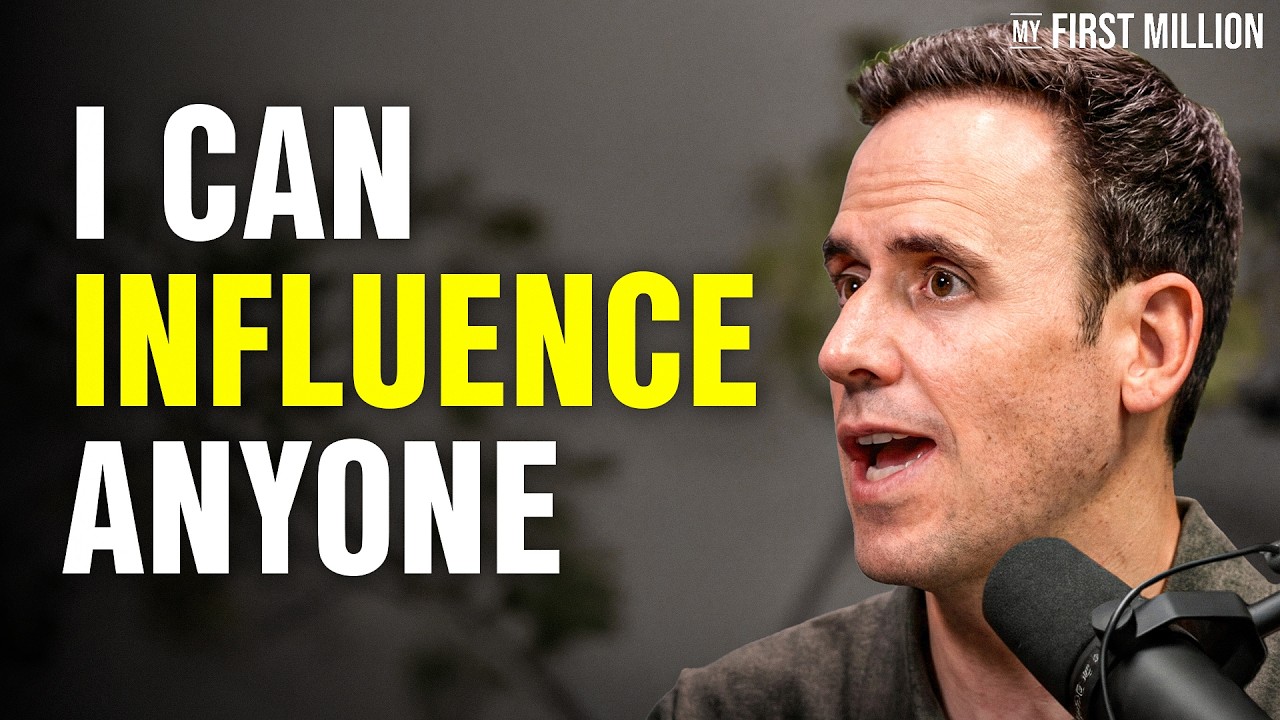
$100M+ Advice That'll Piss Off Every Business Guru (ft. DHH)
 My First Million
Key Moments
DHH shares unconventional business advice: prioritize principles over profits, embrace ignorance, and trust taste over data.
Key Insights
Authenticity and strong opinions, even if unpopular, can be a powerful differentiator in business.
Embracing 'ignorance' and a lack of pre-existing paradigms can foster creativity and lead to novel solutions.
Taste and intuition, especially when backed by strong margins and freedom, can be more effective than solely relying on data.
Long-term sustainability and personal satisfaction in a business are more valuable than rapid, unsustainable growth.
Challenging established gatekeepers and norms, like Apple's App Store policies, is vital for maintaining integrity.
Personal growth and learning are often accelerated by teaching and sharing knowledge.
THE POWER OF AUTHENTICITY AND UNAPOLOGETIC OPINIONS
David Heinemeier Hansson (DHH) emphasizes the strength derived from having and expressing clear, often contrarian, opinions. This approach, exemplified by 37signals, stems from a desire to capture and distribute lessons learned, especially when operating without VC funding. The philosophy is to 'outteach' rather than 'outspend' competitors by being interesting and ruthlessly honest, leveraging the freedom of being a private company without external investor pressures.
EMBRACING IGNORANCE AS A CREATIVE CATALYST
DHH posits that a degree of 'ignorance' or a lack of prior experience can be a significant advantage, enabling individuals to break free from established paradigms. Citing the example of early HubSpot and his own experience during the dot-com bust, he illustrates how constraints and a fresh perspective breed creativity. This unburdened state allows for original thought and the development of innovative solutions not tied to conventional wisdom an idea akin to 'liquid' versus 'crystallized' intelligence.
TASTE, INTUITION, AND THE LUXURY OF MARGINS
The interview highlights the tension between data-driven decisions and trusting one's 'taste.' DHH argues that having healthy profit margins provides the freedom to prioritize intuition and what feels right over relentless A/B testing. This approach, while unconventional in many SaaS businesses, has allowed 37signals to build a company they enjoy working for, focusing on meaningful work rather than constant optimization for marginal gains.
THE VALUE OF LONG-TERM VISION OVER SHORT-TERM GAINS
A core principle for DHH and 37signals is building a business that remains a desirable place to work long-term, rather than rushing for a quick exit. This focus on the 'now' and 'committing to the present' has led to sustained success and personal satisfaction. Even during stressful periods, the company's financial stability (achieved early on) provides a buffer, allowing them to pursue ambitious, long-term projects without succumbing to external pressures.
CHALLENGING GATEKEEPERS AND FIGHTING FOR PRINCIPLES
The confrontation with Apple over App Store policies serves as a prime example of defending core principles important to DHH and his business. The fight for the right to use Apple devices without conceding a 30% cut on sales made outside the App Store underscored a commitment to the ethos of the internet and open source: no permission needed. This principle-driven stance, despite causing significant stress, ultimately led to a favorable outcome and reinforced their integrity.
THE INSPIRATION OF INNOVATORS AND CRAFTSMANSHIP
DHH shares his admiration for individuals who forged their own paths and prioritized craftsmanship and programmer happiness. He cites Ricardo Semler, Kent Beck, and Matts (creator of Ruby) as key influences. These figures, through their unique approaches to business, software methodology, and programming language design, provided permission and inspiration to challenge norms and pursue excellence based on intrinsic value rather than just efficiency or market trends.
NAVIGATING THE EVOLVING LANDSCAPE OF ATTENTION AND AI
The discussion touches on the changing dynamics of gaining attention, suggesting that the 'jab, jab, jab, right hook' strategy is less effective as social media algorithms evolve. DHH notes the transformative impact of AI, particularly its rapid advancement and its implications for programming. While initially skeptical of AI's output quality, recent developments have shifted his perspective, leading to a profound rethinking of workflows and the potential for intelligence explosion.
REFLECTIONS ON BEING PUBLICLY WRONG AND RESULTING
DHH embraces being wrong in public, drawing parallels to venture capitalists who are right only a fraction of the time. He uses his past prediction about Facebook's valuation as a case study in 'resulting' – judging decisions solely on outcomes, which he argues is a flawed approach. True success lies in making good decisions with the best available information, accepting that not all will pan out, and learning from the process rather than clinging to past predictions.
THE ROLE OF CONTEXT IN BUSINESS WISDOM
Acknowledging that wisdom is contextual, DHH cautions against applying a one-size-fits-all approach to business strategy. What works for a small, bootstrapped company like 37signals may not apply to a behemoth like Shopify, and vice versa. He emphasizes the importance of understanding one's specific circumstances, constraints, and goals when adopting any business philosophy or advice, whether it comes from data or intuition. This adaptability is key to sustained success.
THE JOY OF BUILDING AND THE 'FLUFFY LAND' MINDSET
DHH expresses gratitude for reaching a point where business operations feel like 'overtime' or 'fluffy land,' where the core mission is fulfilled and the focus shifts to enjoying the process and pursuing ambitious, even 'ludicrous,' ideas. This perspective, born from early success and financial stability, allows for a detachment from immediate outcomes, fostering better decision-making and a sustained passion for the work itself. It highlights that building a fulfilling work life can be as important as financial metrics.
Mentioned in This Episode
●Software & Apps
●Companies
●Organizations
●Books
●People Referenced
Common Questions
37signals, being a private company, does not disclose its full revenues or profits, stating it has 'tens of millions' in profit. They view this privacy as a significant advantage, allowing them freedom in their business operations.
Topics
Mentioned in this video
A project management web application developed by 37signals, which the speaker often uses as an example when discussing entrepreneurship.
An AI chatbot that the speaker has used since its early days, finding it fascinating despite its initial limitations.
An email service by 37signals that faced conflict with Apple over App Store policies.
An operating system that DHH has embraced and built a custom distribution for, finding it a liberating alternative to Apple's ecosystem.
A major email service that Hey.com aimed to compete with, showcasing the ambition of 37signals' product strategy.
A web application framework created by David Heinemeier Hansson, which allowed him to build Basecamp as a solo programmer due to its rapid development capabilities.
A website from around 2000 that had a lot of traffic but lacked a monetization strategy, serving as a parallel to early Facebook.
Co-founder of 37signals and Basecamp, known for his business philosophy and co-author of 'Rework'.
A venture capitalist who mentioned a study about Nobel Prize winners being more likely to be involved in performing arts.
Author of 'Maverick,' a Brazilian businessman who pioneered innovative work practices in his industrial company, inspiring DHH's approach to business management.
Co-founder of 37signals and creator of Ruby on Rails, known for his strong opinions on business, technology, and productivity.
Co-founder and CEO of Meta Platforms, mentioned for his controversial statement about young people being smarter.
Author of 'Jab, Jab, Jab, Right Hook,' whose content marketing strategy of giving before asking is discussed in relation to social media effectiveness.
Founder and CEO of Shopify, who DHH respects for his vision and early adoption of AI trends and his continuous involvement in Ruby on Rails.
Author of 'Extreme Programming' and 'Smalltalk Best Practices,' a pioneer in agile software development methodologies.
A software company that developed a 30-day operating system based on the speaker's framework for building excellence.
A technology company whose CPUs were reportedly unavailable to DeepSeek due to export restraints, leading them to develop novel training techniques.
An AI company that released R1, reportedly trained with significantly less compute power due to hardware export restrictions.
An e-commerce platform for which DHH serves on the board, noted for its significant growth and longevity.
A software company co-founded by David Heinemeier Hansson (DHH) and Jason Fried, known for its contrarian business advice and focus on profitability and programmer happiness.
Discussed in the context of its App Store policies and an antitrust battle with 37signals over the Hey.com app.
The company that makes DHH's current desktop computer, running Linux, highlighting his move away from the Apple ecosystem.
The social media company was discussed in the context of its valuation in 2010 and its evolution into a surveillance capitalism model.
More from My First Million
View all 25 summaries 64 min
We asked a $15B Investor how to survive the AI bubble
 54 min
5 Killer Businesses On Easy Mode In 2026
 53 min
World’s #1 Mentalist: How To Read Minds, Convince Anyone, and Close Every Deal
 21 min
This Skill Will Make You Irreplaceable in 2026
Found this useful? Build your knowledge library
Get AI-powered summaries of any YouTube video, podcast, or article in seconds. Save them to your personal pods and access them anytime.
Get Started Free