Key Moments
8 Productivity Books To Change Your Life. Here's What Actually Works. | Cal Newport
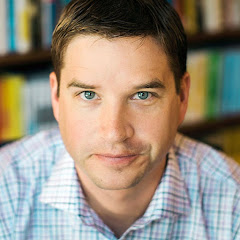 Deep Questions with Cal Newport
Key Moments
Cal Newport reviews 8 productivity books, focusing on one key idea from each.
Key Insights
Stephen Covey's 'Start with the end in mind' emphasizes aligning productivity with life's larger goals.
David Allen's 'Getting Things Done' aims for psychological sustainability by capturing all obligations.
Tim Ferriss' 'The 4-Hour Workweek' advocates for lifestyle design, making work a tool to fund an ideal life.
Greg McKeown's 'Essentialism' suggests saying 'no' more frequently can increase overall value and productivity.
Oliver Burkeman's '4000 Weeks' encourages accepting time limitations and focusing on present enjoyment.
Jenny Odell's 'How to Do Nothing' critiques the monetization of attention and proposes 'doing nothing' as resistance.
Jake Knapp & John Zeratsky's 'Make Time' promotes designing days around key priorities.
Laura Vanderkam's '168 Hours' highlights that people often work less than they perceive, emphasizing intentionality.
Reactive jobs require simplifying all other aspects of life for sustainability.
True discipline involves internal motivation, not just external pressure.
FOUNDATIONAL PRINCIPLES OF PRODUCTIVITY
Cal Newport explores eight influential productivity books, extracting a core idea from each. Stephen Covey's 'The Seven Habits of Highly Effective People' introduces 'start with the end in mind,' urging that productivity should serve life's overarching goals, not be an end in itself. This principle instrumentalizes productivity towards more meaningful objectives, a concept resonant with the 'deep life' philosophy. David Allen's 'Getting Things Done,' often misunderstood as merely task completion, is actually about achieving 'stress-free productivity' by externalizing commitments into a trusted system to free up mental resources and reduce anxiety. This focus on psychological sustainability is key to managing modern work's demands.
LIFESTYLE DESIGN AND ESSENTIALISM
Tim Ferriss' 'The 4-Hour Workweek' championed 'lifestyle design,' framing work as a means to fund an ideal life, a radical departure from the 'passion economy.' Newport highlights Ferriss' idea that work should support enjoyable experiences, like 'mini-retirements,' by cleverly automating and simplifying tasks to generate sufficient income. Greg McKeown's 'Essentialism' introduces the powerful notion that strategically saying 'no' can significantly increase one's value. An anecdote illustrates how an employee who began declining non-essential tasks was not only less overwhelmed but also promoted for focusing on high-impact work, demonstrating that doing less, better, can lead to greater success.
ACCEPTING LIMITATIONS AND RESISTING MONETIZATION
Oliver Burkeman's '4000 Weeks: Time Management for Mortals' encourages embracing finitude, accepting that most desired activities will remain undone. This perspective shift aims to reduce stress and promote savoring present experiences. Jenny Odell's 'How to Do Nothing' critiques the attention economy's commodification of our time, arguing that the constant pressure to monetize every moment erodes humanity. Odell suggests that intentionally 'doing nothing' – engaging in activities purely for enjoyment without documentation or expectation of reward – is a form of resistance against this trend.
FOCUSING ON WHAT MATTERS AND RE-EVALUATING TIME
Jake Knapp and John Zeratsky's 'Make Time' advocates for designing days around intentionally focusing on what matters most, suggesting that prioritizing key tasks will allow other responsibilities to fall into place. This principle aligns with the concept of focused work. Laura Vanderkam's '168 Hours: The Most You Can Get Out of a Week' challenges the perception of constant busyness, revealing through time diaries that many people work fewer hours than they believe. The feeling of overload stems from fragmented work and cognitive taxation, suggesting that intentionality and better systems can reduce perceived workload without necessarily reducing actual work hours.
NAVIGATING REACTIVE PROFESSIONS AND BUILDING DISCIPLINE
For individuals in inherently reactive professions, like surgeons, the advice is to simplify all other aspects of life to maintain sustainability and flexibility. Time blocking becomes impractical; instead, focusing on excelling in the core reactive duty and minimizing external commitments is crucial. True discipline is framed as an identity built through consistent, self-motivated effort rather than solely external pressures. While external structures can reveal one's capacity for discipline, enduring self-discipline requires engaging in pursuits for personal conviction, regardless of immediate external validation or consequence.
THE PUBLISHING LANDSCAPE AND PRODUCTIVITY LITERATURE
Newport addresses the concern that there might be too many productivity books, questioning if new ideas are truly emerging. He argues that reputable publishers are actively seeking quality content, and the productivity genre, particularly from major houses, generally offers thoughtful perspectives rather than mere 'hustle culture' advice. The perceived saturation might be more prevalent in less curated online spaces like YouTube, where extreme or contrarian viewpoints can gain traction. The core message is that readers should focus on books that resonate with their needs rather than fearing an overwhelming or low-quality market.
Mentioned in This Episode
●Software & Apps
●Companies
●Books
●People Referenced
Common Questions
The core idea is to 'start with the end in mind,' meaning productivity should be a tool to support larger, philosophically important goals rather than being pursued for its own sake. It emphasizes figuring out your life's vision first.
Topics
Mentioned in this video
An influential productivity book by Stephen Covey, promoting the idea of starting with the end in mind to align activities with overarching life visions.
A book that argues that saying 'no' to non-essential tasks and focusing on fewer things allows for greater value and advancement.
A book proposing that designing your days around focusing on what matters most will allow the rest to work itself out, prioritizing key tasks.
A book positing that the attention economy encourages us to monetize our time, and proposing 'doing nothing' and focusing on experiences for their own sake as a form of resistance.
Cal Newport's book, which is mentioned in relation to prioritizing work and essentialism, and is often seen competing with 'Getting Things Done' on Amazon's time management list.
A book by Stuart Kaufman exploring self-organization and emergent properties in complex systems, connecting biology with complexity theory.
A book advocating 'stress-free productivity' by externalizing commitments into a trusted system to reduce mental load and anxiety.
A 1950s work by John Kenneth Galbraith that analyzes American economic policy in an era of wealth, urging a rethinking of economic strategy.
A book that advocates for designing one's lifestyle and using work as a means to fund activities like 'mini-retirements', separating work from life goals.
A Robin Cook novel, described by the speaker as one of the worst books read recently, involving a hidden civilization beneath the Earth's crust.
A dark university novel by Leigh Bardugo that imagines Yale's secret societies engaging in magic, featuring a murder mystery and a protagonist who can see ghosts.
A book that emphasizes the finite nature of life (approx. 4000 weeks) and advocates for accepting this limitation to reduce stress and focus on savoring the present.
A book that challenges the perception of being overworked by analyzing time diaries, suggesting that intentionality and how we approach work hours, not just the quantity, contribute to feelings of busyness.
A nature science book by Sy Montgomery that focuses on the human characters finding healing through interactions with octopuses at the New England Aquarium.
A sponsor mentioned for their precision-engineered razors, originally involved in aerospace parts manufacturing.
A sponsor mentioned for their bedding, specifically sheets, praised for comfort and temperature regulation.
A sponsor providing affordable wireless phone plans starting at $15 per month, operating online-only and allowing customers to use their own phones and numbers.
A sponsor offering brain-boosting protein bars made with ingredients like Ashwagandha, Lion's Mane, collagen, and omega-3s, founded by Patrick Schwarzenegger and Maria Shriver.
A system biologist and former Montgomery fellow, author of 'At Home in the Universe', who works on self-organization in complex systems.
A mutual friend of Cal Newport and Tim Ferriss, who recommended 'The 4-Hour Workweek' to Newport.
Co-author of 'Make Time', who adapted Google's Sprint methodology for personal productivity, emphasizing designing days around what matters most.
Author of 'Abduction' and other medical thrillers, known for his detailed writing on medical and naval topics, though 'Abduction' was found disappointing by the speaker.
Author of 'How to Do Nothing', who argues that the attention economy's monetization of our attention leads us to monetize our own time, and suggests 'doing nothing' as an act of resistance.
Author of 'The Seven Habits of Highly Effective People', whose core idea is to 'start with the end in mind', emphasizing that productivity should support larger life goals.
Author of 'Getting Things Done', who focuses on psychological sustainability and reducing stress by capturing all commitments in trusted systems.
Author of 'Essentialism', advocating for doing less in order to achieve more and gain greater value.
Author of '4000 Weeks: Time Management for Mortals', who suggests accepting that we have limited time and that this acceptance can lead to greater relaxation.
Author of '168 Hours: You Have More Time Than You Think', who uses the time diary method to show that people often overestimate their work hours and that intentionality matters more than quantity.
Author of 'The Soul of an Octopus', who explores human healing through interactions with octopuses, sometimes with an unusual focus on the experience of being touched by them.
Author of the novel 'Ninth House', which explores secret societies at Yale with dark magic, inspiring the speaker to consider a similar concept for Dartmouth.
Author of 'The 4-Hour Workweek', promoting lifestyle design and viewing work as a tool to fund an ideal lifestyle, and suggesting 'mini-retirements'.
Former U.S. President who included Jenny Odell's 'How to Do Nothing' on his 2019 reading list.
Co-author of 'Make Time', who adapted Google's Sprint methodology for personal productivity, emphasizing designing days around what matters most.
An economist and former ambassador, author of 'The Affluent Society', known for his liberal economic theory and magisterial writing style.
More from Cal Newport
View all 287 summaries 21 min
Can AI “Scheme”? (Nope.) | AI Reality Check
 31 min
Are LLMs a Dead-End? (Investors Just Bet $1 Billion on “Yes”) | AI Reality Check | Cal Newport
 68 min
Why Is AI Making My Job *Worse*? | Cal Newport
 24 min
Did AI Just Become Sentient? (Not Quite...) | AI Reality Check
Found this useful? Build your knowledge library
Get AI-powered summaries of any YouTube video, podcast, or article in seconds. Save them to your personal pods and access them anytime.
Get Started Free