Key Moments
Is Effective Altruism Blind to the Biggest Problems? – Sam Harris & Will MacAskill
 Sam Harris
Key Moments
Effective Altruism can save lives for $5,000 each, but its focus on quantifiable outcomes may blind it to critical, hard-to-measure problems like political polarization and the erosion of societal values.
Key Insights
Effective altruistic donations via Give Well have saved an estimated 340,000 lives at approximately $5,000 per life, a stark contrast to the $50,000 per year of life in the US.
The EA movement's fundraising has seen significant growth, with donations nearing $2 billion annually, a 50% increase in the last year, despite controversies like FTX.
Farm animal welfare campaigns, such as corporate cage-free initiatives, have led to 3 billion chickens having improved lives annually in the US, funded by tens of millions of dollars.
Pandemic preparedness measures, including mask stockpiles and air sterilization technology, could absorb hundreds of millions to billions of dollars globally and protect against both known and novel pathogen threats.
AI progress is exhibiting stable exponential growth, with AI software engineering capabilities doubling every 4-6 months, potentially leading to AI automating AI research and an intelligence explosion.
Sam Harris argues that EA's valuation of quantifiable outcomes may lead to overlooking significant, unquantifiable problems like political polarization, which can have massive opportunity costs for societal progress.
The impact of effective altruism on global health and fundraising
Effective Altruism (EA) has demonstrably saved hundreds of thousands of lives through targeted interventions, with an estimated 340,000 lives saved via Give Well donations at a cost of around $5,000 per life. This is significantly more cost-effective than providing one year of life in the United States, which costs approximately $50,000. Despite a significant setback from the FTX controversy, the EA movement has experienced substantial restoration and growth. Donations to effective nonprofits are nearing $2 billion annually, marking a 50% increase in the past year. Membership in 'Giving What We Can,' where individuals pledge 10% of their income, has grown by 20-30% year-on-year. This resilience indicates that the core ideas of EA continue to resonate and generate momentum, with an increasing number of people being persuaded to give more effectively, or to use their careers to do good.
A decade of EA growth and personal impact
William MacAskill discusses the 10th anniversary of his book, 'Doing Good Better,' noting updated statistics and a new foreword addressing recent objections and the movement's growth. The book's impact is highlighted by Sam Harris, who attributes a significant psychological shift around his own charitable giving to the '10% pledge.' This pledge, inspired by EA principles, has motivated over 200 individuals through Harris's podcast to pledge 10% of their income, cumulatively generating over $30 million in donations, potentially saving thousands of lives. This underscores the personal and community-level impact of EA's practical frameworks for ethical decision-making and giving.
Expanding the scope of EA: Beyond traditional causes
While global health and development remain a cornerstone of EA, MacAskill advocates for expanding the movement's focus beyond conventionally acknowledged causes. This includes a significant emphasis on farm animal welfare, particularly addressing the suffering in factory farming where approximately 90 billion animals are raised annually. Campaigns to eliminate caged eggs, for instance, have seen 92% fulfillment of corporate pledges, resulting in 3 billion chickens in the U.S. having better lives each year, achieved with relatively small financial investments – tens of millions of dollars. This expansion pushes the boundaries of what is traditionally considered within the EA purview, prompting discussions about the ethical considerations for all sentient beings, regardless of species.
Addressing cynicism and the critique of quantifiable ethics
The conversation confronts cynicism towards foreign aid, particularly the idea that money should be spent domestically. MacAskill counters this by reinforcing the documented effectiveness of robust global health interventions, citing that even aid skeptics acknowledge their benefits. He contrasts the $5,000 cost per life saved in poorer countries with the $50,000 cost in the U.S., highlighting the vast differential impact. However, Sam Harris raises a critical concern: the potential for EA's focus on quantifiable outcomes to lead to 'ethical bankruptcy' by prioritizing measurable problems (like global health or existential risks) over issues that are difficult to quantify but may be equally or more pressing, such as political polarization and the erosion of societal values. He suggests that interventions to inoculate the public against harmful ideologies, though hard to measure, could have a greater impact than current EA focus areas, given the significant opportunity costs associated with political dysfunction.
The philosophical expansion and the 'moral weirdo'
MacAskill defends the practice of taking potentially 'weird-seeming' ethical ideas seriously, drawing parallels to historical moral progressives like the early Quakers who advocated for abolition, pacifism, and women's suffrage. He argues that individuals pushing the boundaries of ethical thought—what he terms 'moral weirdos'—are essential for moral evolution, even if their ideas are initially met with ridicule. This includes exploring the ethical considerations for non-human animals, and potentially, in the future, digital minds. While Harris expresses concern that such esoteric arguments, like the welfare of shrimp, might alienate the public and damage commitment to EA, MacAskill believes that rigorous intellectual and moral exploration, even into uncomfortable or unconventional territory, is crucial for long-term ethical advancement. He distinguishes this principled exploration from a need for broad public appeal, emphasizing the value of deep thinking within the movement.
Pandemic preparedness and future threats
Pandemic preparedness is highlighted as a critical, high-impact area for EA funding. MacAskill notes its growth from a speculative concern to a more urgent priority following recent global events. Investments in areas like mask stockpiles, air sterilization technology, and wastewater monitoring could prevent massive loss of life and trillions in economic damages. Furthermore, this work also addresses the growing risk from novel pandemics, including those engineered through advancements in biotechnology. The democratization of knowledge and equipment for pathogen creation raises the specter of frequent lab leaks and potential bioweapons proliferation, making proactive measures essential to mitigate potentially catastrophic, widespread outbreaks.
The accelerating timeline for artificial intelligence
The conversation turns to the rapid progress in Artificial Intelligence (AI), a field previously considered distant but now understood to be progressing at an exponential rate. MacAskill points to AI's recent breakthroughs in reasoning tasks like mathematics and coding, surprising even AI researchers. He describes a stable exponential progress trend, driven by increased computing power and algorithmic efficiency. AI is already performing tasks that take humans hours, with projections suggesting AI could soon match human capabilities on weekly and monthly tasks. The most significant concern is the potential for AI to automate AI research itself, leading to a rapid intelligence explosion and profound implications for humanity's future, necessitating a serious consideration of AI safety and existential risks.
Opportunity costs and the pursuit of human flourishing
Harris emphasizes that discussions about ethics and EA are often framed around mitigating risks and suffering, neglecting the equally critical aspect of human flourishing and the missed opportunities for positive goods. He argues that while suffering is intensely weighted, the unactualized potential for good is vast and perhaps even greater. The current societal focus, particularly in politics, is seen as an 'opportunity cost,' diverting attention from crucial issues like climate change and proliferation due to political dysfunction and a retreat from global values. Harris posits that interventions to counter societal maladies, such as political polarization amplified by social media and podcast ecosystems, could be more impactful than current EA priorities, given their downstream effects on addressing other major global challenges. He suggests that EA's bias toward quantifiable outcomes might blind it to these crucial, albeit unquantifiable, societal blockages to progress and well-being.
Mentioned in This Episode
●Companies
●Organizations
●Books
●People Referenced
Cost of Saving a Life: Global Health vs. US Healthcare
Data extracted from this episode
| Intervention | Cost per Life Saved/Year | Location |
|---|---|---|
| Saving a life through effective global health interventions | $5,000 | Poorer Countries |
| Giving one year of life through typical US healthcare | $50,000 | United States |
Common Questions
Effective Altruism (EA) is a philosophy and social movement focused on using evidence and reason to determine the most effective ways to improve the world. Traditionally, its main causes have included global health and development, farm animal welfare, pandemic preparedness, and increasingly, artificial intelligence safety.
More from Sam Harris
View all 292 summaries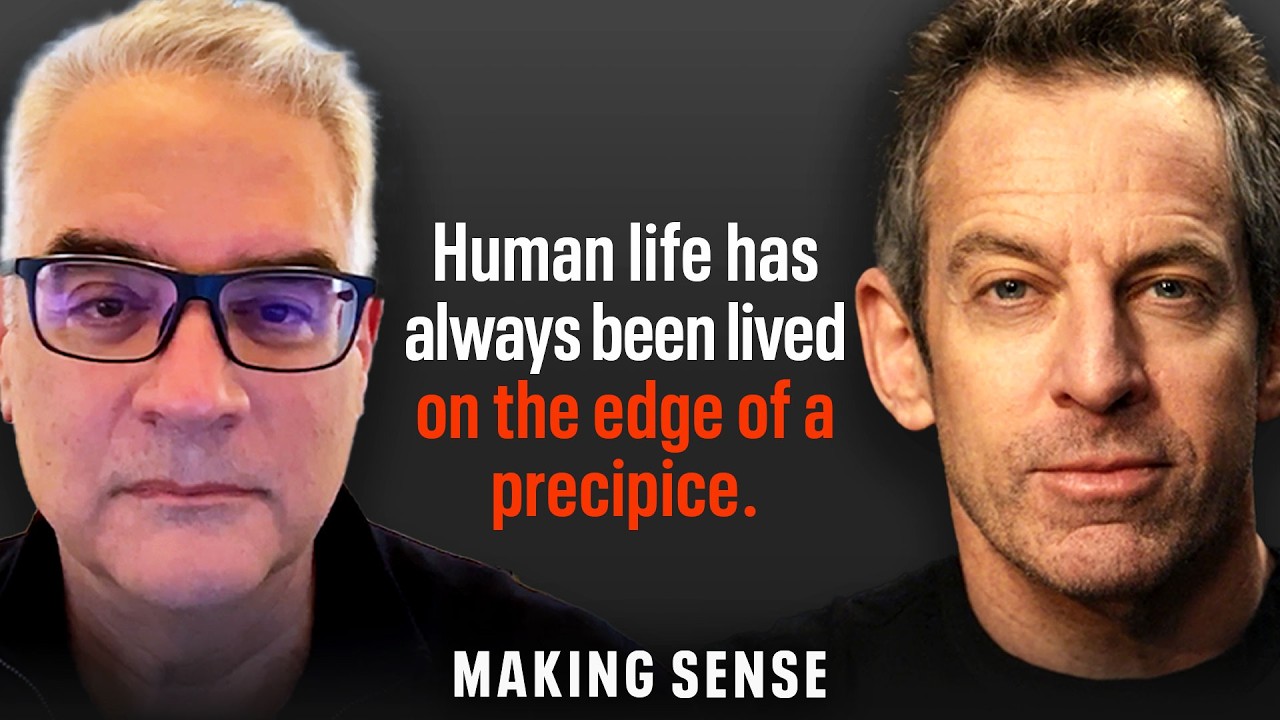 21 min
What Is Technology Doing to Us?
 42 min
Is the Iran War Already Failing?
 90 min
FULL EPISODE: The Politics of Pragmatism and the Future of California (Ep. 464)
 13 min
The Permission to Hate Jews Has Never Been This Open
Found this useful? Build your knowledge library
Get AI-powered summaries of any YouTube video, podcast, or article in seconds. Save them to your personal pods and access them anytime.
Try Summify free